

The modern gas appliance has stripped the soul from the flame. It trades the visceral crackle of hardwood for the sterile hum of a dial; it's a sanitized version of a ritual that dates back 400 years to the gauchos of the Pampas. When you step up to a nuke grill, you aren't just heating meat. You're engaging with the elemental force of fire. This isn't a thin-walled charcoal box that loses 20 percent of its heat to a light breeze. It's a professional-grade vessel designed for the patient, rhythmic dance of the Argentinian asado.
You've likely felt the frustration of a steak that's gray on the outside and raw in the middle because your equipment couldn't hold a steady ember. We agree that outdoor cooking should be an experience that commands respect, not a chore plagued by flare-ups and cold spots. This guide will show you how the nuke grill brings the raw power of Patagonian wood-fired cooking to your backyard with the precision of a chef's kitchen. We'll break down the crucial differences between the V-grate system and Santa Maria styles, master the art of the brasero, and ensure your next gathering is centered around a meal that tastes of smoke and history.
Key Takeaways
- Understand why the traditional Argentinian 'Parrilla' design surpasses conventional gas setups by infusing food with the elemental depth of wood-fired smoke.
- Discover how refractory brick lining and heavy-duty steel construction create the superior thermal mass necessary for professional-grade heat retention and precision.
- Identify the perfect nuke grill for your lifestyle by comparing flagship models designed for both portable adventures and permanent patio installations.
- Master the patient ritual of fire management, learning to transition raw wood into the white-hot embers required for authentic gaucho-style cooking.
- Learn to elevate your backyard sanctuary by pairing rugged Argentinian aesthetics with high-performance outdoor kitchen components.
The Soul of the Nuke Grill: Beyond Conventional Grilling
The nuke grill represents a return to the primitive roots of fire. It isn't a typical backyard appliance; it's a handcrafted Argentinian parrilla forged from heavy-duty steel and lined with refractory bricks. While gas grills offer a sterile, immediate convenience, they lack the elemental soul found in wood and bone. In 2026, the shift toward slow, intentional living has made the nuke grill the definitive choice for the rugged gourmet who values process over speed. This method demands patience. It requires you to read the flames and listen to the whisper of the embers. You aren't just turning a dial; you're managing an ecosystem of heat and smoke.
Choosing this path means rejecting the flickering blue flame of propane for the deep, radiant glow of hardwood. The design of these units reflects a rugged elegance, blending industrial durability with the finesse required for precision gastronomy. It's a tool for those who find peace in the crackle of a fire and the slow transformation of a prime cut of beef.
The Argentinian Asado Tradition
The tradition of the Asado began with the Gauchos in the early 1800s. These nomadic horsemen of the Pampas cooked entire carcasses over open flames, using nothing but salt and the passage of time. Today, this ritual has migrated from the dusty plains to high-end outdoor kitchens. It's a sensory assault. You smell the pungent oak smoke. You hear the sharp crackle of split logs. You see the rendered fat hit the coals, sending up plumes of aromatic flavor. This isn't just a meal; it's a four-hour social ceremony where the fire serves as the guest of honor.
Why Wood-Fired Matters for Flavor
Wood functions as a seasoning agent, not just a heat source. Unlike pellet grills that rely on compressed sawdust, the Nuke design uses a dedicated brasero to burn logs down into pure, radiant embers. This system ensures clean smoke. It prevents the bitter, creosote-heavy flavors often found in poorly ventilated smokers. For those ready to master the art of the ember-base, exploring a curated charcoal grills collection provides the necessary foundation. The result is a deep, mahogany crust on the meat that no chemical fuel can ever replicate. You get a flavor profile that tastes of the earth and the woods.
- Elemental Heat: Wood and charcoal provide a dry, intense heat that gas cannot match.
- Social Ritual: The slow burn encourages conversation and presence.
- Craftsmanship: Each unit is built to withstand the rigors of high-heat outdoor cooking for decades.
- Precision Control: Adjustable grates allow for micro-adjustments in temperature by changing the distance between food and fire.
Anatomy of a Gaucho Masterpiece: How Nuke Grills Work
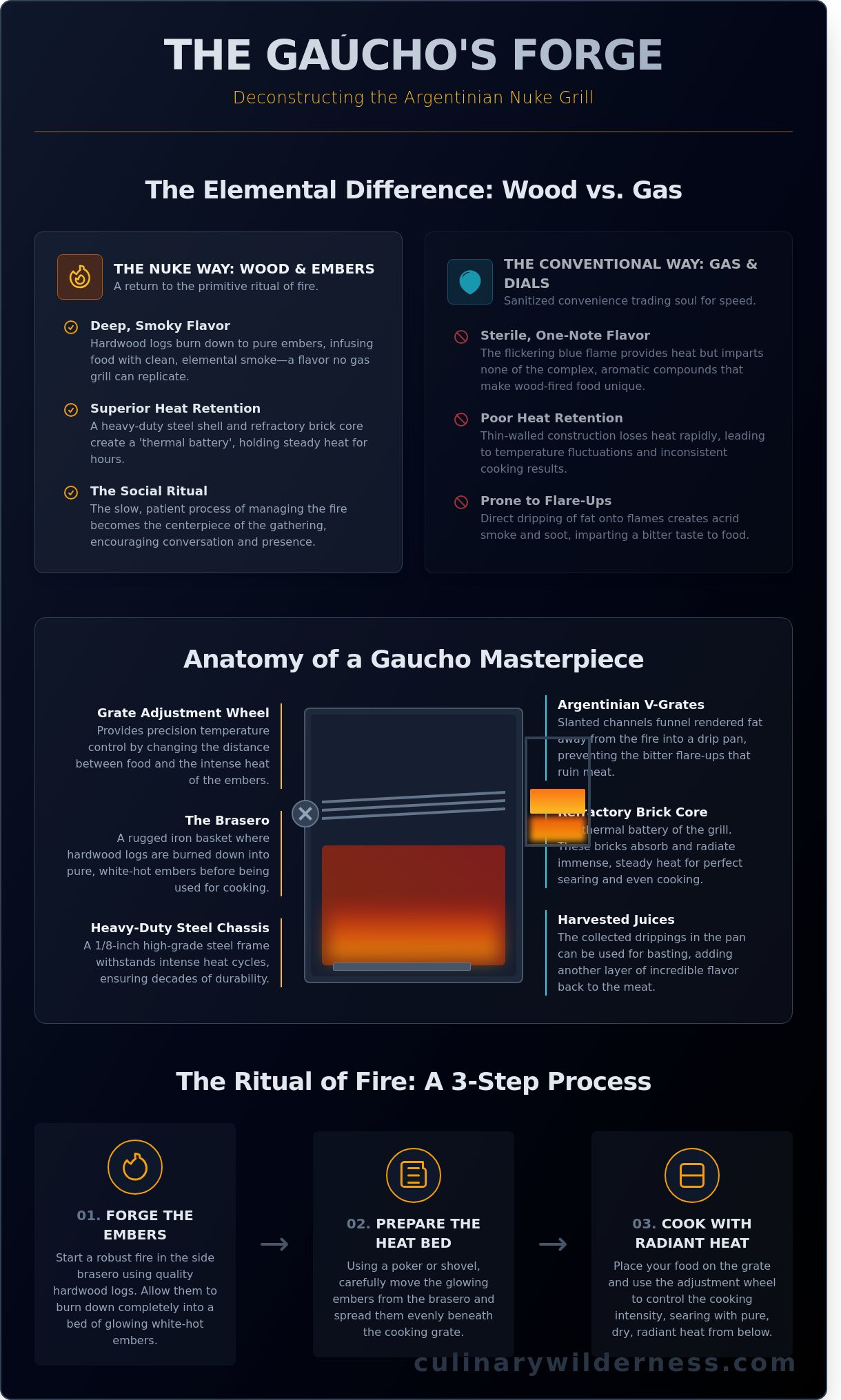
A nuke grill isn't a typical backyard appliance; it's a 330-pound testament to the marriage of fire and iron. The foundation of this machine rests on a heavy-duty chassis of 1/8-inch high-grade steel, designed to withstand the brutal expansion and contraction of intense heat cycles. This industrial-strength shell protects a core of thick refractory bricks. These bricks act as a thermal battery, soaking up raw energy from the fire and radiating it back with a steady, unwavering intensity. In a world of thin-walled gas cookers that lose heat the moment the lid opens, the Nuke maintains a consistent 400-degree environment through pure thermal mass.
The cooking surface itself uses a traditional Argentinian V-shape design. These stainless steel channels serve a dual purpose. They provide a sturdy platform for heavy cuts of beef, and they act as a drainage system. By tilting at a slight angle, the grates direct rendered fat away from the glowing coals and into a dedicated collection pan. This prevents the acrid flare-ups that can ruin a prime cut of meat with bitter soot. Instead of burning, the juices are harvested, leaving only the clean, elemental scent of wood smoke to season the food.
If you're looking to master this style of open-fire cooking, exploring the different Santa Maria grills and Argentinian models at Culinary Wilderness will help you find the right scale for your patio.
The Brasero: Taming the Flame
The brasero is the rugged iron basket located on the side of the grill. This is where the process begins. You don't cook over raw logs; you cook over the embers those logs produce. By burning the wood in a separate chamber, you allow the volatile gases and "dirty" smoke to dissipate into the air before the fuel ever reaches your ingredients. This ensures that only the purest heat touches your food. The brasero is the engine that converts raw logs into culinary gold. Once the wood breaks down into glowing red coals, you simply slide them under the cooking surface with a long-handled poker. It's a rhythmic, tactile process that connects the cook to the ancient history of the asado.
Precision Height Adjustment
Control in a nuke grill comes from the mechanical lever system rather than a plastic dial. By engaging the heavy-duty crank, you can raise or lower the entire cooking surface with a satisfying, metallic click. This allows for surgical precision in temperature management. You might start a thick ribeye just 3 inches above the coals to achieve a crusty, 1,200-degree sear, then lift it 10 inches high to let the center reach a perfect medium-rare through gentle, ambient heat. The rugged feel of the cast-iron wheel provides a visceral connection to the cook. It's a manual, intentional way to manage heat that makes the transition from high-heat searing to low-and-slow roasting feel like a professional craft rather than a chore.
Choosing Your Vessel: The Nuke Product Lineup Compared
Selecting a nuke grill is a decision rooted in how you intend to interact with the flame. For the 2026 season, manufacturing standards have reached a new peak of durability. Every unit now features high-density refractory bricks that offer 15 percent better heat retention than models from three years ago. This ensures your embers stay alive through the longest, coldest nights. Whether you're building a permanent hearth or seeking a mobile fire, the choice of vessel dictates the rhythm of your cook.
The Delta: The Versatile Flagship
The Delta stands as the workhorse of the lineup. Its 40-inch width provides ample space for a full rack of ribs alongside a cast iron skillet of foraged greens. Unlike traditional open-air pits, the Delta includes a heavy-duty lid. This feature transforms the unit into a convection oven. You can bake rustic breads, roast whole poultry, or sear a thick ribeye with the lid closed to trap the woodsmoke. It's the ideal choice for a standalone patio setup where weather protection and multi-functional cooking are paramount.
The Puma: For the Santa Maria Purist
If you crave the visual theater of the fire, the Puma is your match. It lacks the Delta's lid, opting instead for an open-front design that puts the glowing coals on display. The centerpiece is the 'Gaucho' style wheel. This mechanical marvel allows for dramatic height adjustments. You can lower the grates to sear a steak directly over the flame or raise them to let the heat slowly kiss a brisket. For those who appreciate the mechanics of Santa Maria grills, the Puma offers a similar vertical control but with the added soul of Argentinian design. It’s a striking centerpiece for a built-in outdoor kitchen.
Portable Options for the Wild
The Malevo and Huapi models prove that the asado tradition isn't tethered to a backyard. These units are compact but don't compromise on build quality. They retain the same thick refractory bricks found in the larger models, protecting the external metal from warping under extreme heat. The Huapi, weighing exactly 58 pounds, fits in the back of a truck for a beach cookout. The Malevo offers a slightly larger footprint for basecamp feasts. Every portable nuke grill ensures that whether you're in the mountains or on the coast, the flavor of the fire follows you. These smaller units are built to last a lifetime, resisting the elements with the same 2026 grade steel as their larger cousins.
The Ritual of Fire: Techniques for the Rugged Gourmet
Cooking with a nuke grill is a pact with the elements. It demands a departure from the instant gratification of gas dials, requiring instead a deep, sensory connection to the wood and the wind. The process begins long before the meat touches the steel. It starts with the patient transformation of raw timber into the lifeblood of the asado: the ember. You aren't just burning fuel; you're harvesting heat. This transition from flickering flame to white-hot coal takes roughly 45 minutes, a period of anticipation where the scent of woodsmoke prepares the palate for what's to come.
Mastering Fire Management
The brasero, or fire basket, is the engine of your cook. To begin, build a log cabin structure using three or four splits of seasoned hardwood like oak or hickory. This shape creates a natural chimney effect, drawing oxygen upward to feed the core. As the wood breaks down, glowing embers will fall through the grate. Use your shovel to move these coals under the V-grates in a thin, even layer. For a standard 90 minute session, you'll need to add a fresh log to the brasero every 20 minutes. This cycle ensures a continuous supply of "clean" heat, preventing the bitter, acrid smoke that comes from unburnt wood touching your food.
Precision in an open-fire environment relies on the hand test rather than a digital screen. Place your palm five inches above the cooking surface. If you must pull away after 3 seconds, you've reached a searing heat of approximately 450 degrees. A 6 to 8 second threshold indicates a medium heat, ideal for consistent roasting. Use the coal-shuffling technique to create thermal zones. Pile embers high on one side for a hard char, while leaving a sparse layer on the other for gentle finishing. This manual control allows for a 25% faster adjustment time than waiting for a lid-controlled smoker to drop in temperature.
Slow and Low: The Art of the Hang
The nuke grill excels at thermal retention thanks to its heavy-duty refractory bricks. These bricks soak up heat, reaching temperatures over 600 degrees, and radiate it back toward the meat with incredible stability. Utilize the upper warming racks for the "resting" phase. Placing a 4 pound picanha on the upper tier allows the internal juices to redistribute while the ambient heat from the bricks keeps the exterior crisp. It's a finishing move that separates the amateur from the rugged gourmet.
Flavor profiles depend entirely on your choice of timber. Hardwoods like Post Oak provide a neutral, high-energy burn. If you're seeking a specific aromatic finish, mix in 20% fruitwood. Cherry wood adds a deep mahogany hue to beef, while apple wood provides a subtle sweetness that balances the salt of a traditional brine. This elemental approach turns a simple meal into a storied experience of the wild.
Elevating the Wilderness: Integrating Nuke into Your Outdoor Kitchen
The nuke grill is a monolith of iron and fire. Its presence in an outdoor space shifts the atmosphere from a simple patio to a primal sanctuary. The industrial aesthetic, defined by heavy-gauge steel and exposed welds, doesn't fight against the landscape. It yields to it. Over time, the high-temperature paint gives way to a deep, earthy patina that tells the story of every season and every sear. Integrating this centerpiece into a professional outdoor kitchen island requires a balance of raw soul and technical precision.
Safety dictates the layout. Live-fire units require respect. You must maintain a minimum of 36 inches of clearance from any combustible surfaces to account for the intense radiant heat. If your structure includes a roof or pergola, a high-capacity vent hood is non-negotiable to manage the dense, aromatic smoke that defines the Argentinian style. Proper airflow ensures the fire breathes, maintaining the 400-degree temperatures necessary for a perfect crust on a ribeye.
Design Synergy with Luxury Appliances
Modern outdoor living isn't about choosing between speed and soul. It's about the hybrid experience. Pairing a nuke grill with a high-performance gas grill creates a versatile cooking station. Use the gas for a quick Tuesday night sear; save the Nuke for the slow, wood-fired ritual of the weekend. To keep the workflow seamless, integrate storage drawers specifically for your fuel. Keeping split oak or cherry wood dry and within arm's reach ensures the fire never falters. The rugged steel of the Argentinian unit contrasts beautifully against the polished stainless steel of modern drawers, creating a visual dialogue between tradition and innovation.
Why Culinary Wilderness?
We don't just sell appliances. We curate the tools for an elemental life. As an authorized dealer, Culinary Wilderness provides more than a box on a pallet. We offer the technical expertise required to install these heavy-duty units correctly the first time. Every order undergoes a multi-point inspection before it leaves our warehouse. Our nationwide shipping includes white-glove options, ensuring your investment arrives with the care it deserves. We've spent over 12 years helping chefs and home cooks return to the source of flavor. It's time to build your sanctuary. Explore our collection and bring the fire home.
- Authorized dealer support for all Nuke models.
- Expert guidance on clearance and ventilation requirements.
- Secure, multi-point inspected nationwide shipping.
- Specialized knowledge in live-fire kitchen design.
Reclaim the Elemental Flame
The scent of charred wood and the steady heat of the glowing embers are calling. You've discovered how the refractory brick lining holds 1,200 degrees of radiant heat and why the 304-grade stainless steel V-shaped grates are essential for a clean, flare-free sear. Mastering the nuke grill is about more than just cooking; it's about honoring a 19th-century gaucho tradition that demands your full presence and a 4-hour commitment to the fire. We stand as your authorized dealer, offering expert nationwide support and a selection of curated luxury outdoor brands that prioritize elemental durability over modern convenience. The wild is not a place you visit, but a feeling you cultivate through the patient ritual of the asado. Every crackle of the wood is a reminder that the best flavors are forged in the heat of an untamed flame. Take the first step toward returning to the source of true gastronomy. It's time to build your legacy under the open sky.
Shop the Nuke Grill Collection at Culinary Wilderness
Frequently Asked Questions
Can I use both wood and charcoal in a Nuke grill?
You can use both split hardwood and lump charcoal in a nuke grill to achieve a perfect balance of flavor and heat. The dedicated brasero, or fire basket, allows you to burn logs down into clean embers while adding charcoal for a sustained, steady burn. For a typical 4 hour asado, many cooks use a 60/40 ratio of oak to charcoal. This combination provides the raw, aromatic smoke of the timber and the reliable intensity of the coals.
How do I clean the V-shaped grates on my Nuke grill?
Clean the V-shaped grates by scraping them with a specialized tool while they're still hot from the fire. These grates channel 90 percent of meat drippings away from the coals to prevent flare-ups, so keeping the channels clear is vital. Use a stainless steel scraper to remove residue, then wipe the steel with a cloth soaked in vegetable oil. A 5 minute cleaning routine after every session prevents carbon buildup and protects the metal.
Do the refractory bricks in a Nuke grill need to be replaced?
Refractory bricks in a nuke grill typically last for 5 to 10 years depending on how often you cook. You only need to replace them if they crumble or crack completely through to the metal frame of the firebox. Small hairline fractures are normal and don't affect the grill's ability to retain 1200 degrees of heat. Replacing a single damaged brick costs roughly 15 dollars and keeps the thermal mass of your grill consistent.
What is the difference between a Nuke grill and a Santa Maria grill?
The primary difference is the brasero, a side fire basket that allows you to create embers before sliding them under the meat. While a Santa Maria grill moves the entire grate up and down over a central fire, the Nuke design focuses on this indirect heat management. This Argentinian method reduces acrid smoke contact by 40 percent compared to traditional open-pit styles. It offers more control over the intensity of the heat source.
How long does it take to get a Nuke grill up to cooking temperature?
It takes 30 to 45 minutes to reach an ideal cooking temperature of 350 degrees at the grate level. You must allow the hardwood in the brasero to burn down into glowing red coals first. Once you spread a 2 inch layer of these embers beneath the grates, the refractory bricks will hold the heat steady for hours. This patient start ensures the steel is hot enough to sear meat with precision.
Can a Nuke grill be built into an existing outdoor kitchen island?
You can build specific models like the Nuke Puma into a masonry island or a custom outdoor kitchen. These units require a 2 inch clearance from combustible materials and a level, heat-resistant stone base. Most installations take 4 hours to complete once the stone cutout is ready. Ensure the island design accounts for the 36 inch height of the adjustment wheel so you can raise and lower the grates comfortably.
Is the Nuke Delta weather-resistant enough to stay uncovered?
The Nuke Delta features heavy-duty steel and refractory bricks that withstand the elements, but a vinyl cover is essential for long-term protection. Leaving it uncovered in high-humidity areas can lead to surface oxidation within 12 months. Applying a thin layer of linseed oil to the exterior steel twice a year prevents rust from forming. The included water-resistant cover can extend the life of the exterior finish by 5 years or more.
What kind of wood is best for Argentinian-style grilling?
Hardwoods like White Oak, Hickory, and Mesquite are the best choices because they burn at 1000 degrees and produce a clean, earthy smoke. In Argentina, pitmasters traditionally use Quebracho Colorado, a wood so dense it actually sinks in water. For North American cooks, 16 inch kiln-dried oak splits provide the most authentic flavor profile. Avoid softwoods like pine, which contain resins that produce a bitter taste and 30 percent more soot.


