

The convenience of a gas dial is a quiet thief, stealing the soul of your food one sterile sear at a time. It's a trade-off that leaves your palate longing for the primal depth only a live flame can provide. The santa maria grill stands as a defiant return to the 1850s ranchero traditions of California's Central Coast. It's more than a cooking vessel; it's a mechanical symphony of iron and oak.
You've likely felt the frustration of a flavorless sear or the intimidation of a fire that feels impossible to manage. It's easy to get lost in the nuances between Santa Maria and Argentine styles. This guide will give you total control. You'll learn to harness the elevation of the grate to dial in temperatures, moving from a 700-degree sear to a gentle 225-degree roast with a simple turn of the wheel. We'll explore the mechanics and the heritage required to turn your backyard into a sanctuary of fire and flavor.
Key Takeaways
- Connect with the heritage of California’s coastal cooking and learn how the sensory cues of red oak smoke guide the elemental chef.
- Master the tactile engineering of the handwheel to bridge the gap between raw flame and refined gastronomic precision.
- Decipher the critical design differences between a santa maria grill and Argentine styles to choose the right surface for a superior crust.
- Apply the "Rugged Gourmet" technique to navigate heat zones, transitioning from a primal sear to a gentle, wood-fired finish.
- Learn how to safely integrate a heavy-gauge steel pit into your outdoor sanctuary while protecting the thermal integrity of your cabinetry.
The Primal Elegance of Santa Maria Grilling
The air in the California Central Coast carries a specific weight. It’s thick with the perfume of red oak and the faint salt spray of the Pacific. This isn't just cooking; it’s a dialogue with the elements. The snap of dry wood and the orange glow against a darkening sky define the experience of using a santa maria grill. It’s an escape from the sterile click of a gas ignition. Modern chefs are reclaiming this elemental intensity. They’re trading 30,000 BTU burners for the unpredictable, rewarding heat of a live flame. This isn't a mere trend. It’s a restoration of the soul through fire. In a world of digital interfaces, the heavy steel and iron of these grills stand as functional pieces of architectural art in the wild.
A Brief History of the Santa Maria Valley Tradition
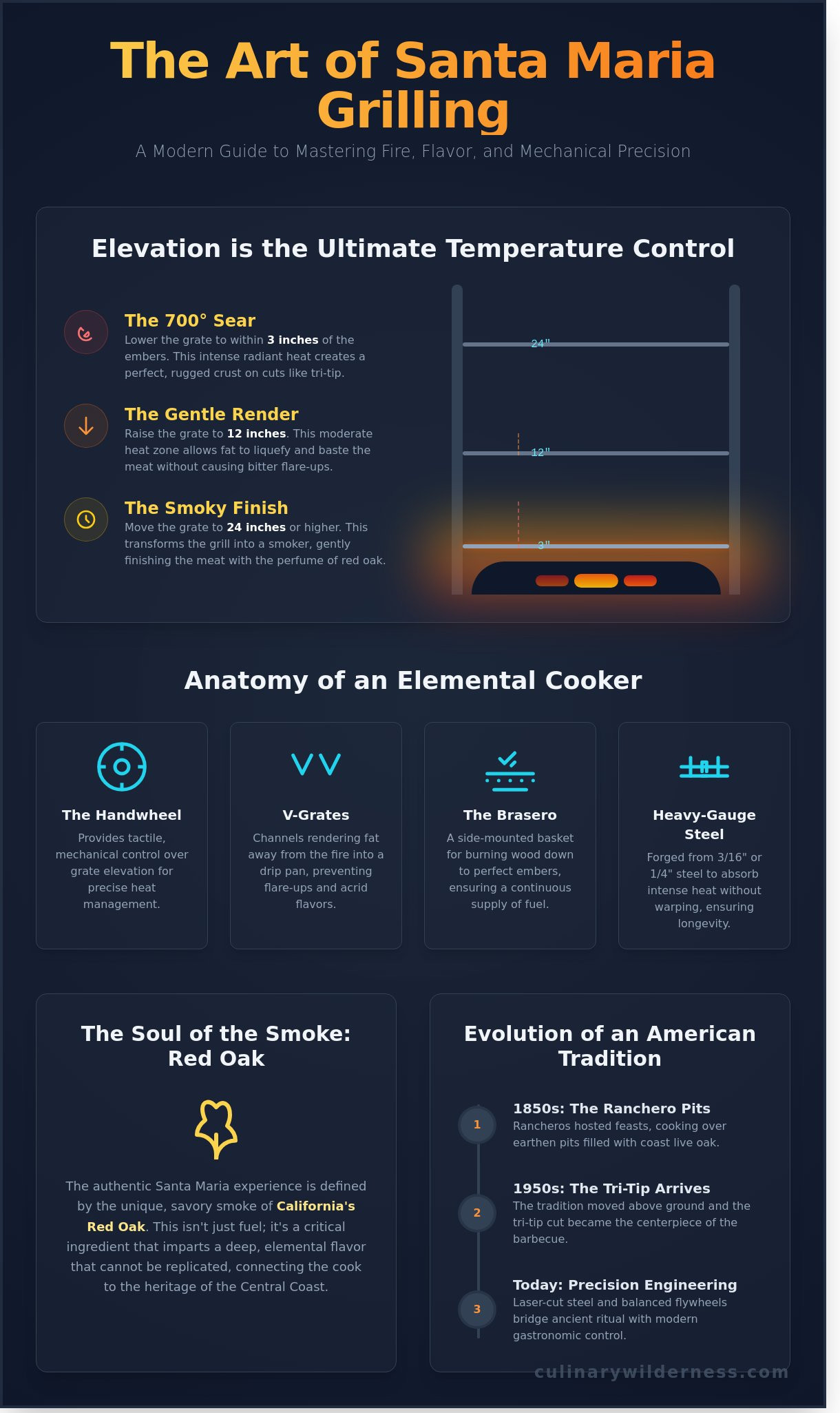
The roots of this method go deep into the 1850s. During this era, rancheros hosted massive mid-harvest feasts for their vaqueros. They dug earthen pits and filled them with coast live oak. By the mid-1950s, the tradition shifted from the ground to the air. Local butchers began using the tri-tip, a bottom sirloin cut that was previously ground into burger meat. This specific cut became the centerpiece of Santa Maria-style barbecue. What began as a hole in the dirt has evolved significantly. By 2026, the modern santa maria grill has become a sophisticated tool for the outdoor epicurean. It features laser-cut stainless steel and precision-balanced flywheels that bridge the gap between ancient ritual and modern engineering.
Why Elevation is the Ultimate Temperature Control
Precision in open-fire cooking comes from distance, not a dial. Gas grills offer a binary choice of on or off. The Santa Maria style offers a spectrum. You turn the wheel. The grate rises. The heat softens. This mechanical control allows for the Rugged Gourmet approach to heat management. Consider these benefits of the adjustable grate:
- The Sear: Lower the meat to within 3 inches of the coals for a 700-degree crust.
- The Render: Raise the grate 12 inches to allow fat to liquefy without flare-ups.
- The Finish: Move the meat 24 inches above the embers for a slow, smoky rest.
The physics are simple but profound. By manipulating the space between the ingredient and the source, you mimic the precision of a professional kitchen while maintaining the untamed flavor of the woods. You achieve a charred, rugged exterior while the interior remains tender and pink. It's a dance of radiant heat that no covered ceramic cooker can replicate. This is the art of the slow burn, where patience is rewarded with a depth of flavor that only red oak can provide.
Anatomy of an Elemental Cooker: The Brasero and the Handwheel
To stand before a santa maria grill is to command the elements through a machine built for endurance. These aren't flimsy appliances meant to last a single season. A true cooker is forged from 3/16-inch or 1/4-inch heavy-gauge steel. This thickness is a functional necessity. It absorbs the brutal, direct heat of a wood fire without warping or buckling. While carbon steel is the traditional choice for its ability to develop a seasoned, weathered patina, 304-grade stainless steel offers a resilient skeleton for those cooking in humid or coastal environments. Both materials provide the thermal mass required to maintain steady temperatures when the wind kicks up across the plains.
The V-grate design serves as the primary interface between the fire and the feast. These inverted steel channels are slanted at a precise angle to manage the rendering fat that drips from a slow-roasting cut. Instead of falling into the embers and sparking bitter flare-ups, the grease flows down the channels into a front-mounted drip pan. This allows the cook to achieve the tri-tip of his dreams, characterized by a clean, smoky crust rather than the acrid taste of burnt fat. It’s a system that prioritizes flavor purity and fire safety in one elegant engineering stroke.
The Brasero: The Heart of the Fire
The brasero is an independent iron basket where the raw energy of wood transforms into the steady glow of embers. In this chamber, you perform the ritual of the burn down. You don't cook with active, licking flames that scorched the exterior while leaving the center raw. Instead, you wait for the logs to collapse into glowing coals. Because the brasero is typically side-mounted, it allows for a continuous cycle. You can feed fresh red oak into the basket on the left while the meat roasts over a bed of perfect coals on the right. This prevents the sudden temperature drops that plague standard charcoal grills when new fuel is added.
The Handwheel and Lifting Mechanism
The handwheel is the chef's tactile connection to the flame. Connected to a heavy-duty 12-gauge stainless steel cable or a galvanized chain, the wheel allows you to raise or lower the cooking surface with a simple turn. This height adjustment is the primary way to regulate heat. The rhythmic, metallic click of the locking pawl as it secures the grate is the most satisfying sound in outdoor cooking; it represents total control over the searing process. To keep this system fluid, apply a light coat of food-grade mineral oil to the upright tracks and the gear assembly every six months. This simple maintenance ensures the mechanism remains responsive, even after years of exposure to the wood smoke and the winter air.
Santa Maria vs. Argentine Style: Deciphering the Open Flame
To the untrained eye, these two titans of the fire pit look identical. Both feature the iconic wheel and axle system. Both allow the cook to raise and lower meat with surgical precision. Yet, the soul of each machine differs. The choice between them isn't just about aesthetics; it's about how you want to manage the relationship between fat and fire. One seeks to tame the flame, while the other invites its most aggressive tendencies.
The primary battleground is the grate itself. Argentine grills, or Parrillas, almost exclusively use V-grates. These are angled channels designed to capture rendered fat and guide it into a drip pan. By diverting the grease, you eliminate 90 percent of flare-ups. This creates a cleaner smoke profile, allowing the natural flavor of the beef to take center stage without the bitterness of burnt fat. The santa maria grill, however, favors the round rod. This design allows every drop of juice to plummet directly into the glowing embers. The result is a violent, soot-rich vapor that perfumes the meat with an unmistakable, charred intensity. It's a visceral, high-heat approach that produces a superior, crusty bark.
The Argentine Asado Influence
The Argentine style is rooted in the 19th-century gaucho traditions of the Pampas. These units are built for the long game. Because the V-grates usually sit at a 15-degree slope, grease management is automated. This allows for the slow-roasting of massive, whole-muscle cuts like tira de asado or vacío. Argentine units often feel more utilitarian and rustic. They're heavy, weathered, and designed to burn wood down to brasas (coals) in a separate brasero before they're spread under the meat. This two-step process ensures a steady, indirect heat that respects the ingredient's integrity over several hours of cooking.
The Santa Maria Distinction
The Santa Maria tradition is a Californian legacy that thrives on volume and speed. It's built for the community. The history of Santa Maria-style barbecue dates back to the mid-1800s, when local rancheros hosted massive feasts for their vaqueros. This style demands the specific, earthy perfume of Red Oak (Quercus agrifolia). Because the round rods allow for a flat-top sear, you can achieve a perfect medium-rare on dozens of tri-tips simultaneously. It's the ultimate tool for high-volume entertaining where the goal is a rapid, intense sear followed by a steady rest. Explore our curated Santa Maria grills collection to see these robust, elemental designs in detail. Whether you seek the clean precision of the Parrilla or the bold, oak-fired roar of the santa maria grill, you're returning to a more honest way of cooking.
Mastering the Wood-Fired Ritual: From Red Oak to Perfect Sear
Cooking on a santa maria grill is a patient dialogue with the elements. It's a process that rejects the frantic pace of modern life, requiring you to read the smoke and feel the heat radiating from the coal bed. The ritual begins long before the meat touches the steel. It starts with the selection of the fuel and the preparation of the cooking surface. You aren't just turning a dial; you're managing a living ecosystem of heat and flavor.
Wood Selection and Flavor Profiles
The choice of wood dictates the soul of the meal. While many woods provide heat, only a few provide the character required for true open-fire gastronomy.
- Red Oak: This is the backbone of Central Coast barbecue. It provides a medium-smoke profile that doesn't mask the natural flavor of the beef. It burns long and steady, maintaining a 1,000 degree Fahrenheit coal bed for hours.
- Hickory and Mesquite: These woods are for the bold. Use them for short, intense sessions where you want a heavy, pungent smoke ring on thinner cuts or wild game.
- Fruitwoods: Apple or cherry wood offers a delicate, sweet finish. These are ideal for wild-caught trout or salmon, where a heavy oak smoke would be too intrusive.
The Art of the Reverse Sear on Open Fire
The "Rugged Gourmet" approach flips the traditional script. You don't start with the sear. Instead, you begin with the meat positioned 18 inches above the embers. At this height, the ambient heat is gentle. It allows the smoke to penetrate the fibers of the protein without tightening them too quickly. This slow ascent to temperature ensures an edge-to-edge pink interior that remains incredibly tender.
Once the internal temperature reaches its target, usually 10 degrees below your final goal, it's time for the final descent. Spin the wheel. Drop the grate until it's hovering just 2 inches above the glowing coals. This is where the Maillard reaction happens. The intense, direct heat creates a crust that is both crisp and deeply caramelized. After the sear, a 15 minute rest is mandatory. Wood-fired proteins are under higher tension than those from an oven; they need time to relax and redistribute their juices before the first cut.
Building a legacy in your backyard starts with the right equipment. To begin your own ritual, explore our collection of hand-forged Santa Maria grills and reclaim the fire.
Maintaining the machine is just as elemental as the cook itself. Seasoning your grates isn't done with chemical sprays. You use the fat from the meat itself or a halved white onion dipped in oil. Over time, the steel develops a black, weathered patina that is naturally non-stick. When the cook is over, don't rush the cleanup. Leave a 1 inch layer of ash in the firebox. It acts as an insulator for your next fire, protecting the steel and reflecting heat back toward the sky. It's a cycle of use and care that respects the tool and the tradition.
Designing Your Sanctuary: Integrating a Santa Maria Grill
Building a space for open-fire cooking is an act of intention. You’re not just installing an appliance; you’re anchoring a landscape. Choosing between a cart-style and a built-in unit dictates the rhythm of your movement. A cart offers the freedom to chase the wind or clear the deck for a larger gathering. A built-in santa maria grill creates a permanent altar to the flame. It becomes the heart of the home, a fixed point where the wild meets the refined.
The fire demands space. Open pits radiate raw energy that standard outdoor cabinetry cannot withstand. Temperatures at the coal bed often exceed 1,200 degrees Fahrenheit. You must maintain a minimum of 12 inches of clearance from any combustible materials. Protecting your investment means understanding the physics of the pit. Safety isn't just a code; it's the foundation of a sanctuary that lasts for generations.
Built-In Installation Considerations
A true masonry pit requires firebrick lining. These dense, alumina-rich bricks absorb the thermal shock, protecting your island structure while radiating consistent heat back toward the meat. If your sanctuary sits under a pavilion or a covered patio, high-performance exhaust hoods are mandatory. They pull the heavy oak smoke away, keeping the air clear for your guests. Surround the heavy-gauge steel with weathered granite or hand-poured concrete. These materials age with grace, mirroring the rugged aesthetic of the grill.
Completing the Outdoor Kitchen
Efficiency doesn't have to sacrifice soul. Integrating weather-sealed storage drawers keeps your split logs dry and your forged tools within reach. Proximity to professional refrigeration ensures the fat on your tri-tip stays cold and firm until the moment it hits the grate.
For the nights when time is short, pairing your wood pit with high-end gas grills provides a necessary balance of convenience and craft. You can also expand your repertoire by adding pizza ovens to the station. This creates a total wood-fired experience that spans from charred sourdough crusts to slow-roasted marrow bones.
Finally, arrange your outdoor furniture to face the hearth. The santa maria grill is a theater of sparks and scent. It's a performance that deserves an audience. By 2026, the shift toward these ancestral cooking methods will define the modern estate. This is a legacy appliance, a piece of functional art that returns us to the source of flavor.
Reclaim Your Primitive Connection to the Flame
Stepping into the world of the santa maria grill is a deliberate choice to honor the 19th-century traditions of the Central Coast. You've mastered the mechanics of the brasero and the rhythmic precision of the handwheel. You understand why seasoned Red Oak is the only fuel capable of producing that signature 400-degree sear. This isn't just about a meal; it's about the patient ritual of managing live embers and the raw satisfaction of outdoor gastronomy. We've vetted the market to become an authorized dealer for 5 of the most durable, heavy-duty brands available today. Every unit we offer features 10-gauge steel or 304 stainless steel construction built to last a lifetime. Our team provides nationwide shipping on all luxury outdoor appliances and offers specialized support for custom outdoor kitchen designs. It's time to bring the untamed spirit of the wilderness to your own backyard. Explore the Elemental Power of Our Santa Maria Grills Collection. The fire is waiting for you to take command.
Frequently Asked Questions
What is the main difference between a Santa Maria grill and a regular charcoal grill?
The primary difference lies in the adjustable height of the cooking surface. A Santa Maria grill uses a handwheel and cable system to move the grate up or down. Standard charcoal grills keep the food at a fixed distance from the coals. This mechanical control allows you to manage temperatures between 200 and 700 degrees Fahrenheit by physically moving the meat away from the fire.
Can I use a Santa Maria grill for slow smoking or just high-heat searing?
You can achieve both techniques by simply turning the handwheel. To sear a steak, lower the grate to within 2 inches of the glowing embers. For slow roasting, raise the meat 18 inches above the heat source. This versatility allows a 4 pound tri-tip to cook for 3 hours, absorbing deep wood smoke without burning the exterior.
How long does it take for a Santa Maria grill to be ready for cooking?
Expect a 45 minute wait for the wood to transform into a stable bed of embers. You'll typically need 4 or 5 split logs of red oak to create enough thermal mass. Unlike a gas burner that starts instantly, this process requires the flames to subside until the logs are coated in white ash. Only then is the radiant heat consistent enough for precision cooking.
Is it difficult to clean a Santa Maria grill compared to a gas unit?
Cleaning a santa maria grill is actually simpler because it lacks complex burners and grease trays. Once the embers cool for 12 hours, you just scoop the dry ash from the firebox. Use a stiff wire brush on the stainless steel V-grates while they're still warm to remove rendered fat. This 10 minute routine prevents carbon buildup and maintains the metal's integrity.
Can I install a Santa Maria grill insert into a wooden outdoor kitchen island?
You shouldn't install an insert directly against wood because the firebox temperatures often exceed 800 degrees Fahrenheit. You must build a 6 inch buffer using non-combustible materials like firebrick or stone. 100 percent of safe installations require this masonry surround to ensure the wooden structure doesn't reach its ignition point during a long afternoon of cooking.
What is a brasero, and do I really need one for authentic Santa Maria BBQ?
A brasero is a heavy steel basket located at the back or side of the grill used to burn logs into coals. While you can burn wood directly under the grate, the brasero provides a continuous supply of fresh embers for 8 hour cooking sessions. It's a vital tool for those who want to maintain a consistent temperature without placing unlit wood directly under the meat.
What are the best types of meat to cook on a Santa Maria style grill?
The 2.5 pound tri-tip is the traditional choice, but any thick cut of beef excels on this system. Ribeyes and top sirloins at least 2 inches thick benefit from the adjustable heat. The open-fire method seasons these proteins with a rugged smokiness that 85 percent of enthusiasts find superior to charcoal briquettes. You'll get a better crust and a juicier center.
How do I maintain the lifting cable and handwheel mechanism?
Apply food-grade mineral oil to the stainless steel cable and handwheel axle every 6 months. Check for frayed strands in the wire and ensure the tension remains even across the spool. This simple maintenance prevents the mechanism from seizing. It's especially important in coastal areas where salt air can increase the risk of corrosion by 20 percent over a single season.


