

The highest BTU rating on a spec sheet is often the loudest lie in outdoor cooking. Most homeowners invest upwards of $7,500 into an outdoor island only to watch their expensive equipment pit and corrode within 48 months. The salt air. The damp earth. These elements claim the unprepared. You know that a true sanctuary requires more than raw power. It needs a vessel that respects the flame. Understanding what to look for when buying a built-in grill means looking past the polished knobs to find the heavy-gauge 304 stainless steel and the thermal mass capable of holding a steady 225 degrees through a rainy autumn night.
It's exhausting to navigate a sea of gimmicks when you simply want a permanent, high-performance station that feels like a natural extension of the landscape. We'll help you select a professional-grade built-in grill that balances elemental fire with culinary precision for your outdoor sanctuary. This guide breaks down the essential metallurgy, the physics of heat retention, and the architectural fit required to master a 900 degree sear and a low-and-slow roast with equal reverence.
Key Takeaways
- Distinguish between a temporary mobile cart and a permanent, high-performance hearth designed to anchor your outdoor sanctuary for a lifetime.
- Identify why 304-grade stainless steel is the non-negotiable standard for enduring the relentless assault of heat and moisture in the wild.
- Gain clarity on what to look for when buying a built-in grill by prioritizing heat density and culinary precision over misleading BTU ratings.
- Navigate the choice between the modern convenience of gas and the primal ritual of charcoal to find the elemental power that suits your craft.
- Learn how to integrate your grill into a masonry island with essential weatherproof storage that protects your tools from the elements.
The Elemental Heart: Defining Your Built-In Grill Needs
The fire calls. To answer it properly, you must move beyond the transient nature of wheels and plastic. A built-in grill is a drop-in head unit designed for permanent installation within a masonry island. It represents a shift from temporary cooking to an architectural legacy. Understanding what to look for when buying a built-in grill begins with recognizing the gap between a standard mobile cart and a professional-grade fixture. While a cart serves a purpose, a built-in unit offers the raw thermal mass and precision required for true outdoor gastronomy. It's the difference between a simple campfire and a dedicated forge.
Your cooking style dictates the machine. The weekend burger flipper seeks convenience; the rugged gourmet seeks mastery over the flame. Professional built-ins provide higher BTU outputs, often exceeding 25,000 BTUs per burner, allowing for the deep, charred crusts that define elemental cooking. This transition involves evaluating various types of barbecue grills to ensure your choice aligns with your culinary ambition. Whether you prefer the steady hum of gas or the ancient crackle of wood, the built-in unit is your primary tool in the wilderness of the backyard.
Why Go Built-In? The Case for Permanence
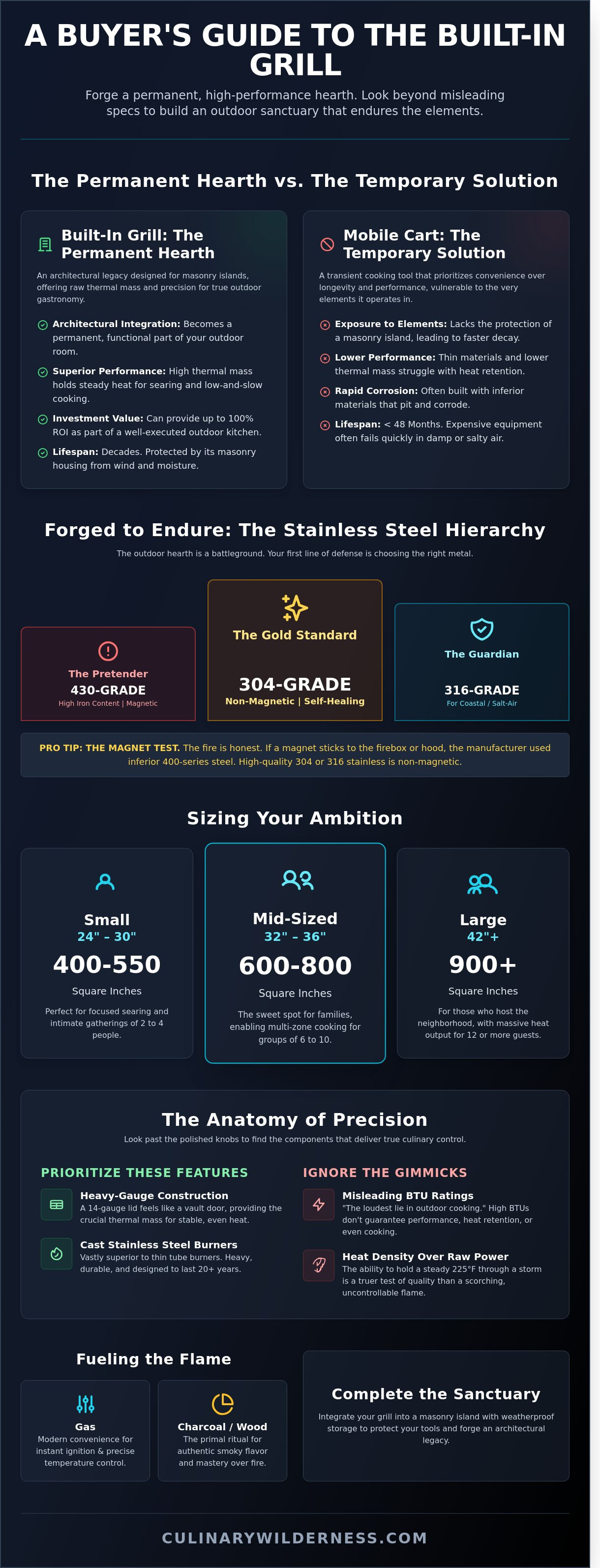
A built-in grill transforms a patio into a functional outdoor room. It integrates into the landscape, using stone and steel to anchor the space. According to 2023 real estate data, a well-executed outdoor kitchen island can provide a return on investment of up to 100%. These units typically use 304-grade stainless steel to withstand harsh seasonal shifts. They stay protected from wind and moisture by their masonry housing, ensuring the internal components remain untamed by the elements for decades.
Sizing Your Ambition
Scale is essential when deciding what to look for when buying a built-in grill. You must measure your culinary wilderness by the square inch to ensure you have enough room for the hunt.
- Small (24-30"): These units offer 400-550 square inches of space. They're perfect for intimate gatherings and focused searing for 2 to 4 people.
- Mid-Sized (32-36"): The sweet spot for families. With 600-800 square inches, you can manage multi-zone cooking for groups of 6 to 10.
- Large (42"+): For those who host the neighborhood. These units provide over 900 square inches and massive heat output for 12 or more guests.
Forged in the Wild: Material Science and Longevity
The outdoor hearth is a battleground. Rain, salt air, and the searing 900-degree breath of the flame conspire to turn a weak investment into a rusted relic. Understanding material science is the first step in knowing what to look for when buying a built-in grill. You need metal that respects the wild. For most backyards, 304-grade stainless steel is the non-negotiable floor. It carries high concentrations of chromium and nickel, forming a protective oxide layer that heals itself. If your home tastes the salt spray of the Pacific or the Atlantic, 316 marine-grade steel becomes the only choice. It contains molybdenum, a silent guardian against pitting and chloride corrosion.
Before you commit, carry a small magnet. The fire is honest; it exposes every shortcut. If the magnet sticks to the firebox or the hood, the manufacturer used 400-series steel. This is a sign of high iron content and inevitable rust. High-quality 304 stainless is non-magnetic, a silent promise of longevity. This level of scrutiny ensures your luxury gas grill survives the relentless cycles of freeze and thaw.
The Stainless Steel Hierarchy
Grade 304 is the industry gold standard. It resists the oxidation that eats away at lesser machines. In contrast, 430-grade steel is a budget-friendly pretender. It looks identical on the showroom floor but often fails within 24 months in humid climates. Beyond the alloy, look at the gauge. A 14-gauge lid feels like a vault door. It provides the thermal mass required for heat retention, ensuring your searing temperatures remain stable even when the autumn wind howls.
Components That Endure
The internal organs of the grill face the most heat. Cast stainless steel burners are superior to thin tube burners. They're heavy, poured into molds, and designed to last 20 years or more. When evaluating what to look for when buying a built-in grill, the grates matter just as much. Heavy-duty hexagonal or cast stainless grates offer a massive heat-soak. They hold energy better than thin wire alternatives. For heat distribution, many experts in this comprehensive built-in grill review suggest ceramic briquettes. They absorb drippings and radiate a steady, even heat that mimics the glow of old-growth embers, whereas simple flavorizer bars can lead to erratic hot spots.
Choosing the right materials is an act of stewardship for your outdoor space. It's about buying once and cooking for a lifetime. If you're ready to select a foundation for your outdoor kitchen, explore our curated collection of professional-grade built-in grills to find a match for your landscape.
Fueling the Flame: Choosing Your Elemental Power
The heat source you choose defines your relationship with the ingredients. It's the most critical decision when considering what to look for when buying a built-in grill. You're selecting a partner for your outdoor rituals. Gas offers the immediate gratification of a button press. It's clean, fast, and remarkably consistent. Charcoal and wood demand a different kind of investment. They require patience, a conversation with the wind, and an understanding of how embers breathe. This primal ritual connects you to the source of the flavor, offering a depth that gas cannot replicate alone.
Gas Grills: Precision and Control
Natural gas remains the standard for the modern outdoor kitchen. It provides an unending flame. You'll never run out of fuel mid-sear, but it requires a professional plumber to run a dedicated line from your home's main supply. In 2026, over 65% of high-end outdoor builds prioritize this permanent connection for its sheer reliability. Liquid propane is the alternative for those who need flexibility. It offers portability within the island footprint, yet it requires dedicated tank storage and easy access for frequent swaps. For those who value heat management above all else, explore our curated collection of professional gas grills to find a machine that matches your ambition.
The Hybrid Advantage
You don't have to choose between speed and soul. Hybrid systems allow you to drop in heavy-duty charcoal trays directly over gas burners, igniting the coals with the flick of a switch. This setup provides that deep, wood-fired char without the hour-long startup time. Serious chefs often install versatile charcoal grills as secondary units to handle dedicated low-and-slow smoking sessions. These systems manage the ritual of the slow-burn beautifully. They turn a simple Tuesday dinner into a primal experience, allowing you to layer hickory or cherry wood smoke into your proteins with surgical precision.
Safety is the foundation of any built-in design. When you encase a grill in a stone or stucco island, gas can trap in pockets. This creates a silent, invisible hazard. You must install stainless steel vent panels to allow airflow and prevent dangerous gas accumulation under the counter. Adhering to the official grilling safety guidelines ensures your culinary sanctuary remains a place of joy. Professional installers recommend placing vents every four to six feet of island length to ensure proper circulation. This isn't just a suggestion; it's a necessity for protecting your home and your guests.
Understanding what to look for when buying a built-in grill means looking beyond the BTU count. It's about the fuel delivery and the air movement. Whether you choose the constant flow of natural gas or the rugged unpredictability of live fire, your choice dictates the rhythm of your kitchen. High-performance valves and heavy-duty ignition systems are the hallmarks of a grill built to survive the elements for a decade or more. Choose a fuel source that aligns with how you live and how you want to cook when the sun begins to set.
The Anatomy of Precision: Features That Elevate the Craft
A grill is more than a box of fire. It's a precision instrument designed to bridge the gap between the raw elements and the refined plate. When you are determining what to look for when buying a built-in grill, the focus must shift from raw power to heat management. Mass-market retailers often push total BTUs as the ultimate metric, but this is a distraction. A 60,000 BTU burner is useless if the heat bleeds through thin metal. You want heat density. This is the ability of the machine to maintain a steady, intense temperature across the entire grate, even when the lid is lifted. High-end 2026 models achieve this through 14-gauge 304 stainless steel construction and ceramic briquette trays that radiate heat evenly, eliminating the cold spots that plague lesser equipment.
Burner Technology and Heat Zones
Mastery over the flame requires the ability to create distinct micro-climates. You need the flexibility to slow-roast a foraged mushroom medley on one side while maintaining a fierce heat for a dry-aged porterhouse on the other. Independent burners with dedicated control knobs allow for these precise heat zones. The infrared sear burner is a non-negotiable for the serious cook. These ceramic burners reach 1,000 degrees Fahrenheit in roughly 180 seconds. This radiant heat creates a crust that seals in juices, a feat traditional blue-flame burners cannot replicate. For those who value the slow evolution of flavor, a dedicated rear rotisserie burner provides consistent indirect heat, perfect for large cuts that require hours of patient rotation.
The Finishing Touches
The environment rarely adheres to a schedule. Integrated technology should serve the cook, not distract from the process. Interior halogen lights are vital for winter nights when the sun dips early. These lights must be rated for high temperatures and shielded from grease. Modern ignition systems have also evolved. Look for hot-surface ignitors that withstand coastal salt air and heavy rain, ensuring the flame catches on the first attempt every time. Convenience features like spring-assisted hoods turn a 50-pound insulated lid into a featherweight component, allowing you to check your progress with a single hand while the other manages the tongs.
A clean workspace is a mark of a disciplined cook. Removable drip trays and front-access clean-out systems are essential for long-term performance. They prevent grease fires and simplify the ritual of post-meal maintenance. Understanding what to look for when buying a built-in grill means looking past the shine to the engineering beneath. If you are ready to upgrade your outdoor kitchen with professional-grade hardware, explore our curated selection of high-performance built-in gas grills today.
Completing the Landscape: Integrating Your Grill
A high performance grill sitting on a temporary table is like a forged blade without a hilt. It lacks balance. It lacks soul. When you evaluate what to look for when buying a built-in grill, you must see the machine as the heart of a larger, living ecosystem. The island is the body that supports that heart. It provides the stability required for precision searing and the permanence that turns a backyard into a sanctuary of fire and flavor. It's the foundation of your outdoor life.
Designing the Island
Choosing between masonry and outdoor kitchen islands that are prefabricated depends on your timeline and your landscape. Custom masonry offers an ancient, weathered aesthetic using local stone, while prefab units provide engineered precision for a faster install. Regardless of the frame, ventilation is the most critical safety feature. You need at least 20 square inches of venting for every 4 feet of cabinetry to prevent gas from pooling in the shadows. For the surface, select soapstone or honed granite. Soapstone is particularly resilient; it can withstand 1,000 degrees Fahrenheit and won't crack under the brutal intensity of the July sun.
The "Kitchen Triangle" remains the gold standard for flow, even in the wild. Position your grill, sink, and refrigeration in a tight formation to minimize steps. This layout keeps the chef at the center of the conversation. It ensures you aren't turning your back on guests while you tend to the embers. A well planned space allows the transition from raw ingredient to finished plate to feel like a choreographed dance rather than a frantic scramble. It respects the rhythm of the meal.
Expanding your culinary range requires more than just a main grate. A premium side burner is the ultimate companion for the rugged gourmet. It allows you to simmer foraged berry reductions or render wild game fats without leaving the heat of the main fire. It transforms your outdoor setup into a full scale kitchen where every element of the meal is touched by the open air. You're no longer just grilling; you're orchestrating a feast.
The Support Cast
Small details dictate the success of your evening. You'll need weatherproof storage drawers to protect your cast iron and carbon steel tools from the damp morning dew. These sealed units keep moisture out, preventing the rust that plagues lesser setups. Don't overlook the necessity of access doors for gas shut-offs and plumbing; they are the quiet gatekeepers of your utility lines. Trash bins and paper towel holders should be integrated into the cabinetry to prevent constant trips back to the indoor kitchen. Finally, verify if your island material is combustible. If you're building with wood or certain synthetics, an insulated jacket is a non negotiable requirement. It acts as a thermal barrier, ensuring the 500 degree heat of your grill doesn't compromise the structural integrity of its home. These final checks ensure that when you're considering what to look for when buying a built-in grill, you're investing in a legacy that lasts for decades.
Ignite Your Elemental Kitchen
Your outdoor sanctuary begins where the heavy steel meets the living flame. By focusing on 304-grade stainless steel and precision heat control, you ensure your kitchen survives 20 years of shifting seasons and mountain air. We've detailed how fuel types and features like cast brass burners dictate the soul of your cooking. The scent of charred oak and the sizzle of fat on a 1,000-degree grate are the rewards of a carefully forged space. Understanding what to look for when buying a built-in grill means choosing gear that respects the ingredients as much as the chef. As an authorized dealer for Fire Magic and ZLINE, we provide expert technical support for 5-star luxury builds and offer nationwide shipping on all premium appliances. It's time to stop dreaming and start searing. The wild is calling, and your perfect hearth is ready to answer.
Begin your journey to the source; shop our professional built-in grills today.
Frequently Asked Questions
What is the best material for a built-in grill in a coastal environment?
316L marine-grade stainless steel is the only material that survives the salt-heavy air of a coastal environment. This specific alloy contains 2 percent to 3 percent molybdenum, which prevents the pitting and corrosion that destroys standard metals. While 304 stainless is the industry standard, it often develops tea-staining or rust within 24 months near the ocean. Invest in 316L to ensure your grill remains a permanent fixture against the relentless salt spray.
Do I need an insulated jacket for my built-in grill?
You need an insulated jacket if you're installing your grill into a combustible island made of wood, cedar, or PVC. These liners prevent the heat from reaching 400 degrees Fahrenheit, which can ignite framing materials over time. If your island is built from stone, brick, or steel studs, you can skip the jacket. Safety is paramount when taming fire within the structures of your home, so always check your local 2026 fire codes.
How many BTUs do I actually need for a professional-grade grill?
A professional-grade grill should deliver between 80 and 100 BTUs per square inch of cooking surface. This ratio ensures the grate reaches searing temperatures of 700 degrees Fahrenheit quickly and maintains heat when the lid is open. A 500 square inch grill needs at least 40,000 BTUs to handle thick cuts of wild game. High BTUs alone don't define quality, but they provide the heat necessary for a perfect, elemental char.
Can I convert a propane built-in grill to natural gas later?
Most high-end built-in grills can be converted using a manufacturer-approved orifice kit, but you must verify this before purchase. Brands like Lynx or Blaze offer these kits for approximately 50 to 100 dollars. It's a critical factor in what to look for when buying a built-in grill if you plan on running a permanent gas line later. Don't attempt a conversion without the specific parts designed for your model's valves and pressure requirements.
What is the difference between 304 and 443 stainless steel?
304 stainless steel contains 8 percent nickel and 18 percent chromium, making it highly resistant to rust and non-magnetic. In contrast, 443 stainless steel replaces nickel with higher levels of chromium and titanium. While 443 is more affordable and expands less under high heat, it lacks the long-term durability of 304 in damp or humid climates. Choosing the right alloy is essential for building a weathered, lasting outdoor kitchen that survives the seasons.
Is an infrared burner worth the extra cost for a built-in unit?
An infrared burner is worth the investment if you prioritize a steakhouse-quality sear at temperatures reaching 1,000 degrees Fahrenheit. These ceramic burners turn gas into intense radiant heat in under 3 minutes, which is much faster than traditional burners. This method locks in moisture and creates a crust that blue-flame burners cannot match. It's a vital tool for the rugged gourmet who demands precision and raw power in their outdoor sanctuary.
How do I properly vent an outdoor kitchen island for a gas grill?
You must install at least two vents for every 4 to 6 feet of island cabinetry to prevent dangerous gas buildup. For propane, place vents low since the gas is heavier than air; for natural gas, place them high near the countertop. Each vent should provide a minimum of 10 square inches of open area for airflow. Proper venting prevents explosive pockets of gas from forming beneath your cooking surface during a leak.
What are the standard cutout dimensions for most built-in grills?
There are no universal cutout dimensions, though a 34 inch width is common for most 32 inch grill heads. Every manufacturer provides a specific template that usually requires a depth of 22 inches and a height of 10 inches. Knowing these measurements is a primary part of what to look for when buying a built-in grill to avoid costly masonry errors. Always have the physical grill on-site before your contractor cuts the stone or brick.


