

The crackle of seasoned oak and the scent of charred fat aren't just sensory rewards; they're the sounds of a 71% recovery on your initial capital. While some view a premium build as a luxury, the outdoor kitchen return on investment in 2026 has proven to be a resilient anchor for home equity, often outperforming interior remodels by 12%. You likely feel the weight of those high upfront costs for professional-grade steel, especially when you're worried that a brutal winter might turn your investment into a weathered relic. It's difficult to commit when resale data feels as shifting as the wind through the pines.
You deserve a culinary hearth that stands firm against the elements and the market alike. You're about to discover the exact financial returns of a rugged cooking space and how to select appliances that thrive in the raw intensity of the outdoors. We'll break down the high-value features that buyers actually crave and give you the tools to build with both grit and financial precision.
Key Takeaways
- Understand why the 2026 outdoor kitchen return on investment can reach up to 200%, transforming your landscape into a high-yield financial asset.
- Discover the "Seamless Transition" rule for matching outdoor aesthetics to your home’s interior to maximize resale value and visual flow.
- Learn why professional-grade appliances are essential for the "Buy Once, Cry Once" philosophy, ensuring your investment survives the untamed elements.
- Master the tactical layout of "Cold, Hot, Wet, and Dry" zones to create a culinary workflow that is as efficient as it is elemental.
- Explore how sourcing from authorized dealers provides the professional foundation needed to build a kitchen that thrives for decades.
What is the Real Return on Investment for an Outdoor Kitchen in 2026?
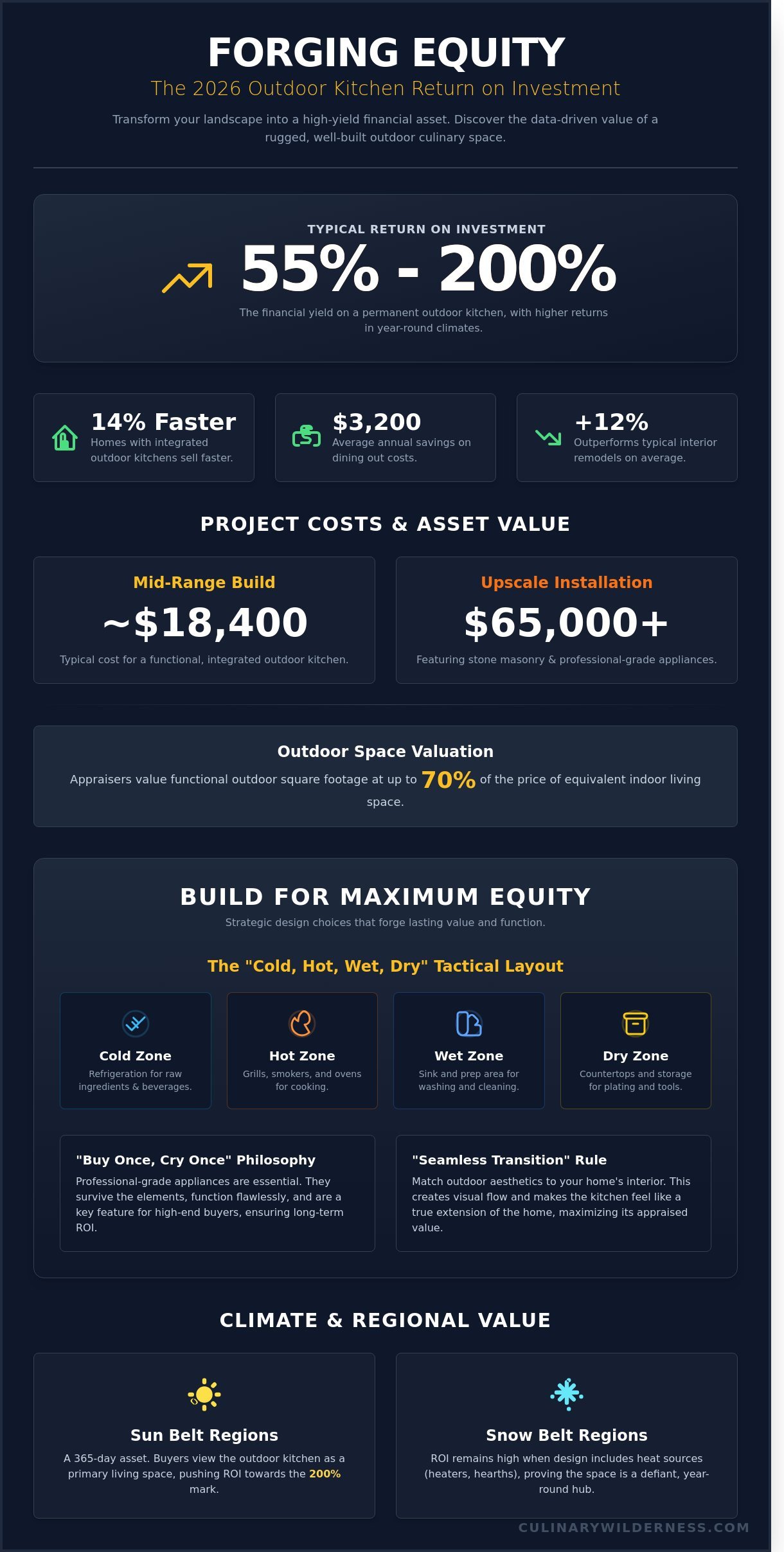
The scent of burning hickory doesn't just signal a meal; it signals a shift in how we value our land. In 2026, the outdoor kitchen return on investment has evolved from a luxury addition to a fundamental requirement for high-end properties. Modern buyers aren't looking for a simple grill tucked into a corner. They're seeking a visceral connection to the elements. Data from the 2026 National Design Trends Report indicates that homes featuring integrated outdoor culinary spaces sell 14% faster than those without. The financial yield typically fluctuates between 55% and 200%, depending on the climate and the ruggedness of the build. In regions like the Sun Belt, that return frequently climbs toward the higher end of the spectrum as year-round utility becomes a primary selling point.
The "Outdoor Living" movement has shed its status as a passing trend. It's now a permanent architectural pillar. This shift is rooted in a collective desire to escape the sterile confines of indoor air. By grounding a home’s value in stone, fire, and steel, you're tapping into a deep-seated human instinct. Understanding the history of outdoor cooking reveals that we aren't chasing a modern fad, but returning to an ancestral necessity. In 2026, the ROI isn't just about the resale price; it's about the elemental joy of preparing foraged ingredients over a live flame. It's about the crackle of the fire and the weight of a well-balanced blade in the cool evening air.
The Financial Benchmarks of Outdoor Equity
In 2026, a mid-range outdoor project costs approximately $18,400, while upscale installations featuring stone masonry and professional-grade wood-fired ovens often exceed $65,000. Construction costs have risen 12% since 2023, making durable materials like weathered steel and local granite essential for long-term equity. Appraisers now categorize "functional outdoor square footage" as a distinct asset class. This means a 400-square-foot outdoor kitchen is often valued at 70% of the price of indoor living space, provided it includes permanent utilities and weather protection. These numbers provide a hard-edged floor for your investment's future value.
Beyond the Spreadsheet: The Value of Experience
The "Rugged Gourmet" lifestyle is a powerful psychological lever for future buyers. It transforms a backyard into a destination. Beyond the eventual sale, you'll find immediate returns in reduced household overhead. Families who cook outdoors report an average savings of $3,200 per year on dining out costs, as the home becomes the neighborhood’s primary culinary hub. There is also a quiet social capital earned here. Hosting a dinner where guests watch the slow transformation of a salt-crusted trout over embers creates a memory that no indoor restaurant can replicate. This intangible value is what truly separates a house from a legacy property.
The Elemental Variables: What Actually Drives Outdoor Kitchen Resale Value?
The value of a home isn't just found in its square footage. It's found in the way the land is tamed to serve the table. When calculating your outdoor kitchen return on investment, you must look beyond the cost of the stone. Real value is forged where the wild meets the refined. In high-end markets, a permanent outdoor kitchen isn't a luxury; it's an expectation. Portable carts on wheels offer convenience, but they don't add to the appraisal. Appraisers view built-in masonry and plumbed appliances as permanent improvements to the real estate, often yielding 100% to 200% of their cost in added home value. This isn't just a grill on a patio. It's a structural extension of the home's soul.
Regional Appeal and Market Demand
Climate dictates the rhythm of the harvest and the longevity of your investment. In Sunbelt states like Arizona or Florida, an outdoor kitchen is a 365-day asset. Buyers in these regions view the patio as a primary living space rather than a seasonal escape. By 2026, the demand for high-performance outdoor spaces is projected to rise by 8.3% annually. This growth is fueled by a shift in how we inhabit our homes. Recent outdoor kitchen market trends indicate that luxury buyers now prioritize year-round functionality over seasonal novelty. In Snowbelt regions, the ROI remains high if the design includes heat sources like infrared heaters or a wood-fired hearth. It's about defiance against the frost. It's about proving that the fire doesn't have to go out just because the leaves have fallen.
Material Integrity and the Test of Time
The elements are relentless. Salt air, humidity, and ice will humble a poorly built kitchen in two seasons. To secure your outdoor kitchen return on investment, you must choose materials that respect the environment. 304-grade stainless steel is the standard for a reason. It resists the oxidation that ruins cheaper alloys in coastal environments. Stone, granite, and masonry should be thick and rugged. They should look like they grew from the ground itself. A weathered patina on a copper hood is beautiful. A rusted hinge on a budget grill is a liability. If you want to build something that lasts, you must return to the source and select materials that age with grace rather than decay.
The "Seamless Transition" rule is the final variable in the value equation. Your outdoor space shouldn't feel like an afterthought or a separate entity. It must mirror the interior's architectural DNA. If your home is a mid-century modern masterpiece, your outdoor kitchen shouldn't be a rustic log cabin. Consistency signals quality to a potential buyer. It tells a story of intentionality and craftsmanship. In the 2026 real estate market, 74% of luxury home shoppers cited "indoor-outdoor flow" as a top three priority during their search. When the transition is seamless, the kitchen becomes a sanctuary. It becomes the heart of the home, shifted under the open sky.
Luxury signals are the subtle cues that tell a buyer they are standing in a space of consequence. It's the weight of a heavy cabinet door. It's the silent glide of a soft-close drawer. It's the way the honed countertop feels under a hand that has spent the day in the dirt. These sensory details translate directly to financial value. A kitchen that feels flimsy will never command a premium price. Build for the wild. Build for the fire. Build for the future.
Professional vs. Builder-Grade: Why Appliance Quality Dictates Your Long-Term ROI
The fire is the soul of the space. The vessel that holds it must endure the lash of the wind and the bite of the frost. When we speak of the outdoor kitchen return on investment, we are really speaking about the endurance of materials. A builder-grade grill from a big-box retailer is often made of 430 stainless steel or painted carbon steel. These materials surrender to the elements within three seasons. They rust; they pit; they fail. A professional-grade kitchen relies on the "Buy Once, Cry Once" philosophy. It demands 304-grade stainless steel, a material that shrugs off humidity and salt spray. Brands like Fire Magic and ZLINE don't just cook food; they serve as permanent fixtures that retain their value for decades.
According to the NAR 2023 Remodeling Impact Report, an outdoor kitchen can yield a 100% return on investment, but this figure assumes the space remains functional and aesthetic at the time of sale. A rusted, non-functional burner is a liability that a home inspector will flag, potentially costing you thousands in concessions. High-end appliances carry warranties that often span 15 years to a lifetime. This longevity transforms a purchase into a capital improvement. When a prospective buyer sees the heavy, cast-stainless burners of a professional setup, they see a kitchen that is ready for the next twenty years of wood-fired gatherings.
The Core Investment: Gas Grills and Pizza Ovens
The anchor of any high-performing backyard is a luxury gas grill. These units offer superior heat retention and BTU outputs exceeding 25,000 per burner, allowing for the deep, elemental sear that cheaper units cannot achieve. Buyers recognize the prestige of these heavy-duty machines. Similarly, the surging demand for outdoor pizza ovens among modern buyers has changed the ROI landscape. An integrated pizza oven suggests a lifestyle of slow-food mastery and intentional gathering. It is a focal point that commands attention during a home tour, signaling that the property is designed for more than just a simple cookout.
The Supporting Cast: Refrigeration and Storage
A grill alone is a barbecue station; a kitchen requires a workflow. This is why outdoor refrigeration is the most requested feature by buyers looking for luxury homes. It eliminates the need to run back to the indoor pantry, keeping the experience grounded in the natural world. To complete the professional narrative, you must integrate stainless steel storage drawers and sealed cabinets. These components protect your tools from the damp earth and pests, creating a "true" kitchen environment. When you include integrated sinks and side burners, you provide a self-contained ecosystem. This completeness is what drives the outdoor kitchen return on investment to its maximum potential, as it offers a seamless transition from the wild garden to the refined plate.
- Durability: 304-grade stainless steel prevents structural failure in coastal or humid climates.
- Performance: Consistent heat distribution ensures the "Rugged Gourmet" experience every time.
- Resale: Premium brand recognition acts as a trust signal for high-net-worth buyers.
- Maintenance: Professional units are designed for easy cleaning and part replacement.
Choosing professional-grade equipment is a declaration of quality. It tells the story of a homeowner who values the passage of time and the integrity of their tools. Cheap appliances are fleeting; they are shadows that vanish after a single harsh winter. Investing in the elemental strength of Fire Magic or the architectural precision of ZLINE ensures your outdoor space remains an asset rather than a chore. You are not just building a place to cook. You are building a legacy of flavor and fire that will stand as long as the home itself.
How to Build for Maximum Equity: A Tactical Guide to Design and Zones
Building an outdoor culinary space is an exercise in balancing the raw elements of nature with the surgical precision of a chef's line. To secure a high outdoor kitchen return on investment, you must move beyond the simple charcoal kettle. True equity is forged through intentional movement and the seamless flow of energy between fire, water, and stone. A disorganized layout doesn't just frustrate the cook; it signals a lack of professional foresight to future buyers, potentially dragging down the property's appraised value by 10% or more compared to a well-zoned build.
Designing the Four Functional Zones
The Hot Zone is the heart of the operation. It's where the sear happens and the smoke rises. Position your primary grill and high-output side burners at least 10 feet away from the home's siding to ensure safety and prevent soot staining. This protects your siding and your long term equity. Directly adjacent, the Cold Zone houses your refrigeration. Keep these compressors shielded from direct sunlight and at least 3 feet from heat sources. This separation ensures your appliances don't work overtime, extending their lifespan in harsh climates.
The Wet and Dry Zones handle the grit and the grace of the meal. Incorporating outdoor sinks is non-negotiable for a high-ROI build. It transforms a grill station into a self-sufficient ecosystem. Your Dry Zone requires at least 36 inches of continuous counter space for prep. Without this, the cook is forced back inside, breaking the elemental connection to the outdoors and diminishing the "second kitchen" appeal that 65% of luxury homebuyers now demand.
The Infrastructure of Longevity
The bones of the kitchen determine its financial endurance. While propane tanks offer portability, hard-piped natural gas lines add roughly $3,500 in perceived value to a property. It suggests permanence. It tells a buyer they will never run out of fuel mid-sear. Electrical requirements are equally vital. Modern builds should include dedicated 20-amp circuits for "smart" appliances and integrated lighting. If the wiring is an afterthought, the cost to retrofit through stone masonry later can reach $5,000, a massive hit to your net gains.
- The Golden Triangle: Keep the distance between the grill, sink, and primary prep area between 12 and 26 total feet for peak efficiency.
- Drainage and Ventilation: Use a 1% slope for flooring and ensure all grill islands have vent panels to prevent gas buildup.
- Climate Control: 1500-watt infrared heaters and high-CFM ceiling fans can extend your "ROI season" by 90 to 120 days in temperate zones.
Avoid the common mistake of choosing "indoor-only" materials. Using porous stones or cheap cabinetry that swells in the humidity will turn your investment into a maintenance nightmare within three seasons. A kitchen that weathers poorly is a liability. Instead, opt for 304-grade stainless steel and high-density polyethylene (HDPE) or weather-sealed stone. These materials withstand the frost and the sun, ensuring your outdoor kitchen return on investment remains high when it's time to hand over the keys. Authenticity in materials creates a space that feels like it belongs to the earth, not just the house.
Ready to anchor your outdoor space with professional-grade hardware? Explore the Culinary Wilderness collection to find the elemental tools your build deserves.
Investing in the Source: Why Culinary Wilderness is the Foundation of Your Outdoor Equity
Building a space for fire and food is an act of permanence. When you commit to a project of this scale, the components you choose dictate whether the space becomes a sanctuary or a source of frustration. Sourcing your equipment from an authorized dealer of premium brands is the first step in securing a high outdoor kitchen return on investment. It ensures that every burner, drawer, and stone surface is backed by a legitimate warranty and expert technical support. This isn't just about buying a grill; it's about engineering an environment that survives the freeze of January and the humidity of August. A kitchen built with 304-grade stainless steel components will remain functional for 20 years or more, whereas cheaper alternatives often succumb to rust within three seasons.
Professional support transforms a simple backyard upgrade into a legacy asset. By working with specialists who understand the structural requirements of outdoor cabinetry and the gas flow needs of high-BTU burners, you avoid the costly mistakes that plague DIY attempts. We focus on a philosophy where rugged performance meets refined design. This balance ensures that your kitchen isn't just a utility, but a centerpiece that commands attention during a home appraisal. In 2024, data from the National Association of Realtors suggests that 78% of homebuyers prioritize high-quality outdoor living spaces, making the durability of your hardware a critical factor in your home's total equity.
- Authorized Assurance: Full manufacturer warranties protect your capital.
- Material Integrity: Marine-grade materials prevent corrosion in coastal or harsh climates.
- Technical Precision: Expert guidance on ventilation and gas safety.
- Aesthetic Longevity: Designs that transcend fleeting backyard trends.
Expert Curation for the Serious Chef
We don't fill our catalog with every brand on the market. We select equipment from manufacturers who have proven their mettle over decades of service. We feature brands known for precision engineering, providing the control needed for a delicate sear, alongside those offering heavy-duty reliability required for frequent, demanding use. For those who want to master the art of wood-fire cooking, we provide nationwide shipping for specialized Santa Maria grills. These units allow for precise temperature control by raising and lowering the grate over open embers. This specialized equipment does more than cook food; it creates a narrative of tradition and technique that resonates with future buyers and guests alike.
Your Journey Back to the Elemental
The final step of this journey isn't the installation; it's the moment the first steak hits the hot grate. Creating a space that honors the ingredients and the wild requires a kitchen that performs under pressure. When you invest in quality, you're buying the peace of mind that your equipment will ignite every time, regardless of the weather. This reliability is the true measure of your outdoor kitchen return on investment. It turns your backyard into a destination where the modern world fades away, replaced by the scent of woodsmoke and the rhythm of the seasons. You aren't just building a place to eat; you're returning to a more elemental way of living. Begin designing your high-ROI outdoor kitchen today and secure a foundation that will serve your family and your home's value for a lifetime.
Claiming Your Stake in the Elemental Market
Building a sanctuary for open-fire cooking is a strategic asset for the 2026 landscape. Recent industry projections indicate that a high-performance outdoor kitchen return on investment can reach 100% to 200% when you prioritize professional-grade components over temporary fixes. By integrating 304 stainless steel and distinct culinary zones, you're securing equity that resists the bite of winter and the heat of summer. It's about more than resale value; it's about the permanence of the hearth.
Quality is the only bridge between a trend and a legacy. Builder-grade units often fail within 36 months, but we serve as an authorized dealer for Fire Magic, ZLINE, and Kokomo to ensure your investment lasts decades. We provide expert support for custom island configurations and offer nationwide shipping on all premium built-in components. You don't have to compromise on the tools that connect you to the wild. Explore our collection of professional-grade outdoor appliances and begin your journey back to the source. The embers are waiting for you.
Frequently Asked Questions
Does an outdoor kitchen add square footage to a home appraisal?
Outdoor kitchens don't add to your home’s official square footage on a professional appraisal. Appraisers follow ANSI standards that only count finished, heated indoor spaces as gross living area. However, a stone-clad kitchen increases your property's functional utility score. This shift can boost your outdoor kitchen return on investment by capturing 60% to 100% of construction costs in the final sale price. It's about the value of the land, not the interior footprint.
What is the average cost to build a high-ROI outdoor kitchen in 2026?
Building a high-ROI outdoor kitchen in 2026 costs between $16,500 and $38,000 on average. Materials like weather-beaten stone and 304-grade stainless steel drive these costs. By 2026, labor rates for masonry are projected to rise by 4% annually. Investing in a permanent stone base ensures the structure survives the elements. It turns raw earth into a sophisticated cooking station that lasts for decades.
Which outdoor appliances have the best resale value?
Built-in 304-grade stainless steel grills and weather-rated refrigeration hold the highest resale value. A 36-inch professional grill often retains 70% of its initial cost during a home sale. Buyers look for the gleam of high-grade steel against the rugged texture of a stone island. These core elements anchor the space. They provide the heat and cold necessary for elemental cooking, making them essential for a strong outdoor kitchen return on investment.
Is a pizza oven a better investment than a second grill?
A secondary grill is a more practical investment than a pizza oven for most buyers. The Hearth, Patio & Barbecue Association reports that homeowners use grills 52 times per year, while pizza ovens see use only 12 times. The scent of charred meat over a flame is a universal draw. Unless you're a dedicated artisan, stick to the versatility of fire and iron. It ensures your investment serves the daily rhythm of the wild.
How do I protect my outdoor kitchen investment in cold climates?
Protect your investment by blowing out all plumbing lines and using 18-ounce vinyl covers. In cold climates, water trapped in pipes causes $1,500 in average damage when the ground freezes. Shut off the water before the first frost hits the soil. Wipe down stainless steel with a thin layer of mineral oil to guard against the salt and damp. This ritual keeps the weathered metal ready for the return of spring.
Do I need a permit for an outdoor kitchen to ensure it adds value?
You must secure plumbing and electrical permits to ensure the kitchen adds legal value to your home. Roughly 15% of property sales encounter friction because of unpermitted outdoor structures. An uncertified gas line is a liability, not an asset. Inspectors verify that your hearth is safe and follows local fire codes. Proper documentation proves your kitchen is a permanent, professional-grade addition to the landscape.
How much does a luxury built-in grill affect home price?
A luxury built-in grill can increase a home's asking price by $5,000 to $12,000. Data from the National Association of Realtors shows that high-end outdoor upgrades often yield a 100% recovery of costs. The sight of a professional-grade burner suggests a lifestyle of refined precision amidst the raw outdoors. It’s a focal point that captures the imagination of buyers who crave the ritual of cooking over an open flame.
Can I build an outdoor kitchen in phases to manage the investment?
Building in three distinct phases allows you to manage costs without sacrificing the integrity of the design. Start with the foundation and gas lines; this core accounts for 40% of the total budget. Add the grill and masonry in the second year. Finally, install specialty items like warming drawers or lighting. This patient approach ensures each element is chosen with care, reflecting a deep respect for the process of creating a lasting outdoor sanctuary.


