

Most homeowners believe 304-grade stainless steel is an immortal shield against the elements, yet salt air can pit and tea-stain unprotected metal in as little as 180 days. You have likely felt that sting of disappointment when a supposedly weatherproof hinge seized after one harsh winter or found a $40 bag of hardwood pellets turned to useless mush by a single July thunderstorm. It's frustrating when the gear meant to bring us closer to the source fails under the weight of the sky. We expect our tools to be as resilient as the fire we build.
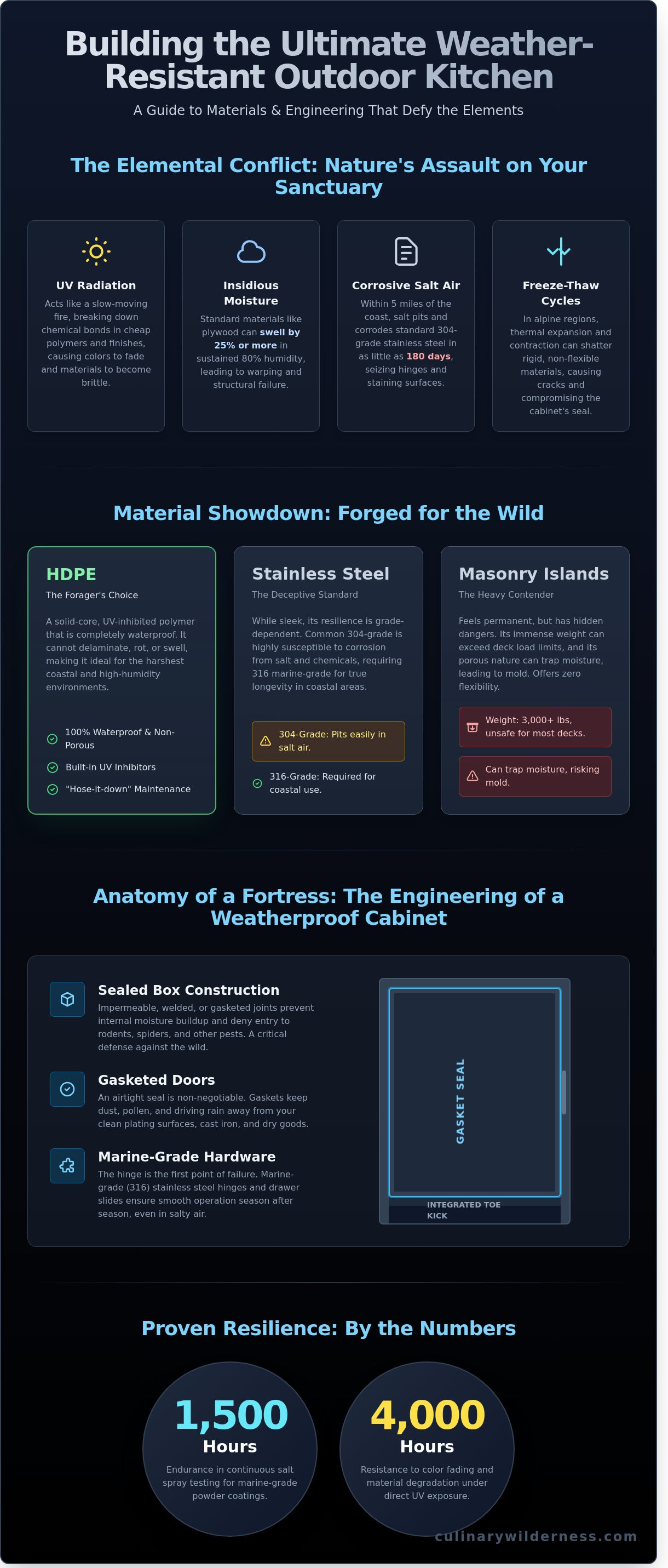
To build a true sanctuary, you need weather resistant outdoor kitchen cabinets engineered with the same rigor as a deep-sea vessel. This guide explores the material science behind high-density polyethylene and marine-grade powder coatings that endure 1,500 hours of continuous salt spray testing without flinching. You'll discover how to achieve a maintenance-free space where storage stays bone-dry and colors remain vibrant even after 4,000 hours of direct UV exposure. We will examine the rugged engineering required to bridge the gap between the raw intensity of the wild and the refined precision of the gourmet.
Key Takeaways
- Uncover the material science behind HDPE and marine-grade steel to ensure your sanctuary survives the raw intensity of the seasons.
- Learn why the hinge is often the first point of failure and how specialized rain hoods protect your weather resistant outdoor kitchen cabinets from the creeping damp.
- Master the strategic placement of "Dry Zones" to keep your essential tools and foraged ingredients safe from the sudden shifts of the wild.
- Navigate the nuances of lifetime warranties and American-made quality to invest in a culinary legacy that honors the passage of time.
The Elemental Conflict: Defining True Weather Resistance
Nature is a patient predator. It waits for the smallest seam in your cabinetry to begin the work of reclamation. To build a kitchen under the open sky, you must understand the elemental conflict between your tools and the wild. True weather resistant outdoor kitchen cabinets don't just sit in the sun; they survive it. The distinction between 'outdoor-rated' and 'weatherproof' is measured in seasons. An outdoor-rated cabinet might survive a summer drizzle, but a weatherproof structure endures the 100-degree heat of a Texas July and the sub-zero bite of a Vermont January without warping or cracking.
UV radiation acts as a slow-moving fire, breaking down the chemical bonds in cheap polymers and finishes. Moisture is even more insidious. Traditional Cabinet construction and materials, such as standard plywood or medium-density fiberboard, can swell by 25% or more when humidity levels hit a sustained 80%. The Rugged Gourmet chooses materials that endure rather than expire. Your geography dictates your choice. If you live within 5 miles of the coast, salt air will pit and corrode 304-grade stainless steel within 12 months. You need 316-grade or high-density polyethylene. In alpine regions, the freeze-thaw cycle can shatter rigid, non-flexible materials through sheer thermal expansion.
The Anatomy of a Weatherproof Cabinet
A true outdoor cabinet is a fortress. Look for sealed box construction where every joint is gasketed or welded. Open-back designs are a failure point. They invite spiders, rodents, and dampness to nest behind your grill. Integrated toe kicks are vital. They prevent the accumulation of leaf litter and organic debris that rots against the base. Never settle for 'water-resistant' labels. In the wild, water-resistant means it will eventually fail. You need a structure that is impermeable, protecting your cast iron and dry goods from the 50 inches of rain that fall annually in regions like the Pacific Northwest.
- Sealed Enclosures: Prevents internal moisture buildup and pest intrusion.
- Marine-Grade Hardware: Ensures hinges don't seize after one salty winter.
- Gasketed Doors: Keeps dust and pollen away from your clean plating surfaces.
Why Masonry Isn't Always the Answer
Stone and stucco islands feel permanent, yet they possess hidden limitations. A fully loaded masonry island can easily exceed 3,000 pounds. Most residential decks are engineered for a live load of only 50 pounds per square foot. This makes stone a dangerous choice for elevated spaces or rooftop gardens. Standalone, modular weather resistant outdoor kitchen cabinets offer a 70% reduction in weight while providing superior flexibility. If you decide to move your fire pit or expand your prep area, modular units adapt. Masonry is a tomb; modular cabinetry is a living, breathing workspace that evolves with your culinary journey. It allows for airflow, reducing the risk of trapped moisture that can lead to structural mold in stone-clad frames.
Choosing the right material is the first step in returning to the source. It's about respecting the elements enough to build something that can stand among them. Whether you're searing a foraged elk loin or fermenting wild berries, your kitchen should be as resilient as the landscape it inhabits.
Materials Forged for the Wild: HDPE vs. Stainless vs. Aluminum
The elements don't negotiate. When you move your craft outside, you're placing your tools at the mercy of the sky and the soil. Selecting the right foundation for your weather resistant outdoor kitchen cabinets isn't just a design choice; it's a survival strategy for your sanctuary. Each material reacts differently to the bite of frost and the sear of the summer sun. You need a build that respects the environment while resisting its harshest moods.
The Resilience of HDPE Cabinets
HDPE is a solid-core, UV-inhibited polymer that cannot delaminate or rot. It’s the forager's choice for high-moisture environments. In coastal regions where humidity levels frequently hover above 85 percent, traditional cabinetry swells and surrenders. HDPE remains indifferent. This material is dense and non-porous; it won't absorb the scent of woodsmoke or the juices of a harvested catch. Manufacturers now bake UV inhibitors directly into the polymer, ensuring that deep, charred tones don't fade into a ghostly grey after a single season of exposure.
Maintenance is a matter of brutal simplicity. You don't need specialized oils or delicate polishes. The "hose-it-down" reality is why this material thrives in the wild. A high-pressure spray removes salt spray and forest pollen in seconds. It’s a rugged, functional choice for those who want to spend their time stoking the fire rather than scrubbing the counters.
Stainless Steel: The Professional Standard
There’s a refined precision to stainless steel that brings the discipline of a professional kitchen to the edge of the woods. However, not all steel is forged equal. 304-grade stainless steel, containing 18 percent chromium and 8 percent nickel, serves well in most inland settings. If your camp sits within 5 miles of the ocean, you must demand 316L marine-grade steel. This alloy includes 2 percent molybdenum, a crucial addition that prevents "tea staining," those stubborn orange oxidation streaks caused by salt-laden air.
Thermal conduction is the trade-off for this silver aesthetic. On a 95-degree afternoon, a stainless steel cabinet face can reach internal temperatures of 150 degrees Fahrenheit. It’s a visceral reminder of the sun's power. When designing these layouts, it's vital to follow Outdoor kitchen building codes to ensure proper ventilation and gas line safety. This ensures your professional-grade setup remains a safe place to practice your craft.
Marine-Grade Aluminum and PVD Finishes
Aluminum is the lightweight champion of the modern patio, offering a strength-to-weight ratio that allows for sprawling, complex layouts without stressing your deck's joists. It doesn't rust. It doesn't attract the pests that plague timber. For the gourmet who craves the look of weathered oak but demands the durability of metal, Physical Vapor Deposition (PVD) finishes are the answer. This process bonds a wood-grain aesthetic to the aluminum at a molecular level, creating a surface that won't chip or peel under the stress of thermal expansion.
Choosing aluminum means embracing a material that is 100 percent recyclable and naturally resistant to corrosion. It’s a sophisticated bridge between modern engineering and the organic textures of the forest. If you're ready to start building your outdoor sanctuary, aluminum provides a versatile canvas that stands up to the untamed world. It’s a quiet, confident choice for a kitchen that’s meant to last as long as the landscape itself.
Engineering the Seal: Hardware and Internal Protection
The hinge is the first point of failure. It's the pivot where the wild meets the domestic, and in a budget setup, it's the first thing to surrender. A single season of coastal mist or heavy humidity turns standard zinc hardware into orange, seizing dust. Truly weather resistant outdoor kitchen cabinets rely on rain hoods and integrated gutter systems to keep moisture away from these vulnerable joints. These aren't just aesthetic choices; they're architectural defenses. A rain hood acts as a protective brow, shedding water away from the door's top edge. Without it, water pools on the top of the door, eventually bypassing the seal to soak your clean cast iron or linen napkins.
Gasket seals are the unsung heroes of the wild kitchen. High-quality units use EPDM or Santoprene gaskets, the same resilient materials found in high-end automotive door seals. They compress to form an airtight barrier against fine dust, driving rain, and the persistent insects that seek shelter in dark corners. While a magnetic closure offers a sleek, handle-free look, you must consider the wind. In high-wind areas like coastal bluffs or open plains, mechanical latches provide a physical lock that magnets can't match. However, if you prefer the clean lines of magnets, ensure they're rare-earth versions with at least a 6-pound pull force. This prevents "door chatter" during a 40-mph gale, keeping your sanctuary quiet and your contents secure.
The internal environment of your cabinet is a microcosm of the landscape. If the seal is too tight without a plan for moisture, you've created a humidor for mold. The engineering must account for the transition between the heat of the day and the chill of the night. Using weather resistant outdoor kitchen cabinets that feature precision-milled components ensures that while the exterior is rugged, the interior remains a sterile, dry environment for your culinary tools. It's about creating a fortress that still knows how to breathe.
Marine-Grade Hardware: The Silent Sentinel
The difference between 304 and 316 stainless steel is found in the chemistry. While 304 is standard, 316 stainless steel contains 2% to 3% molybdenum. This specific addition prevents "pitting," those small, dark holes that signify structural rot in salty environments. Hidden hinges are superior because they internalize the pivot point, shielding it from direct rain. This design choice can extend the life of your hardware by 12 years compared to exposed barrel hinges that catch every drop of dew.
Ventilation and Internal Airflow
Stagnant air traps humidity, especially after a sudden temperature drop. Proper ventilation is critical when housing gas grills to prevent dangerous gas accumulation. Safety codes, such as those from the NFPA, require 20 square inches of ventilation for every 4 feet of cabinet length. For combustible cores like marine-grade plywood, an insulated jacket is a non-negotiable requirement. Non-combustible cores like high-density polyethylene or stainless steel offer more durability against the elemental heat of the flame.
Designing Your Sanctuary: Layout and Appliance Integration
Designing an outdoor kitchen requires a hunter’s intuition. You aren't just placing boxes in a row; you're mapping the flow of smoke, the path of the sun, and the rhythm of the flame. The classic work triangle, the distance between the grill, the sink, and the refrigeration, should measure between 12 and 26 total feet. This specific range keeps your movements purposeful without feeling cramped. In the wild, efficiency is safety. In the kitchen, it's the difference between a perfectly medium-rare elk loin and a charred disappointment.
Divide your space into distinct territories to maintain order. The Wet Zone holds the basin where you wash foraged ramps or rinse the grit from a day’s harvest. The Dry Zone houses your weather resistant outdoor kitchen cabinets, keeping flour, dry rubs, and sensitive grains protected from the coastal mist or mountain humidity. When you integrate heavy hitters like pizza ovens and smokers, the engineering must be precise. A 250-pound ceramic smoker demands a reinforced base that won't sag over a 10-year lifespan. Seamless integration between cabinet and appliance prevents thermal bridging and structural stress. Without this precision, heat transfers to the frame, potentially warping the structure or degrading the finish when internal temperatures exceed 900 degrees Fahrenheit.
Storage Solutions for the Serious Cook
Cast iron is the soul of the outdoor kitchen, but its weight is unforgiving. A single 12-inch skillet weighs nearly 8 pounds. You need heavy-duty storage drawers rated for 100-pound loads to handle a full set of Dutch ovens and griddles safely. Use storage doors to mask the necessary but unpolished elements: the 20-pound propane tank or the intricate PVC plumbing under the sink. Consider these essential storage additions:
- Dedicated pull-out cabinets for 35-quart trash and recycling bins to keep pests away.
- Deep drawers for 40-pound bags of lump charcoal or stacks of split hickory.
- Sealed spice pull-outs that prevent moisture from clumping your sea salt and peppercorns.
The Social Hub: Islands and Seating
The outdoor kitchen island acts as a natural gathering point, much like a fallen log around a campfire. Plan for a 12-inch countertop overhang to allow for comfortable bar seating. This 12-inch clearance ensures guests don't knock their knees against the weather resistant outdoor kitchen cabinets while you work. Ergonomics matter when a meal lasts three hours. For late-night sessions, 3000K warm-white under-cabinet LEDs provide the 50 lumens of light needed to judge the sear on a steak without ruining the twilight ambiance. It's about creating a space where the cook is part of the conversation, not isolated by a wall of smoke.
Build a kitchen that stands as a testament to the elements. Select your professional-grade cabinetry and begin your journey back to the source.
The Culinary Wilderness Standard: Choosing Your Legacy
The outdoor kitchen is more than a place to sear a steak. It is an altar where the harvest meets the flame, a sanctuary built to withstand the raw intensity of the seasons. When you select weather resistant outdoor kitchen cabinets, you aren't just buying storage; you are anchoring your home to the earth. A 2023 report from the National Association of Realtors suggests that a high-quality outdoor kitchen can provide an estimated 100% to 200% return on investment. This shift from a simple patio to a permanent wilderness kitchen transforms your property value by creating a functional, year-round living space that defies the traditional boundaries of the home.
Evaluating a warranty in the outdoors requires a skeptic's eye. Many brands claim a "Lifetime" guarantee, but the fine print often excludes the very elements that cause failure. A true legacy warranty covers structural integrity against salt spray, humidity, and UV degradation for at least 10 to 15 years. American-made craftsmanship remains the gold standard here. Domestic fabricators typically utilize 0.063-inch thick marine-grade aluminum or 16-gauge stainless steel. These materials offer a rigidity that flimsy, imported "big box" kits simply cannot match. Precision matters when the wind howls and the ground shifts. A cabinet door that hangs straight today must still click shut with a satisfying snap a decade from now.
The temptation of a DIY kit is often tempered by the reality of the elements. Professional consultation ensures your layout accounts for prevailing winds, drainage, and the heat signatures of open-fire grills. Expert designers understand that a 30-inch grill requires specific clearance that a standard retail manual might overlook. They see the kitchen as a holistic system where fire, wood, water, and earth interact. Choosing professional guidance over a generic box store solution is the difference between a temporary fixture and a permanent heirloom.
Sustainability and Longevity
Building for the wild means building with a conscience. The environmental impact of replacing cheap, particle-board cabinetry every 5 years is staggering. Choosing premium materials is an act of conservation. Aluminum is roughly 95% recyclable at the end of its life, and High-Density Polyethylene (HDPE) remains inert, never leaching chemicals into the soil. These cabinets represent heirloom quality. They are designed to outlast a 30-year mortgage, standing as a testament to the "buy it once" philosophy that honors both the craftsman and the landscape.
Taking the First Step Toward the Wild
Begin by measuring your space with an eye for the elemental. Note where the sun hits at 6:00 PM and where the winter snow drifts. A custom-feel modular layout starts with accurate dimensions, but it breathes through the advice of those who understand the wild. Consulting with experts who live and breathe these requirements ensures your weather resistant outdoor kitchen cabinets are placed for optimal flow and protection. Every great journey starts with a single plan. Explore our collection of premium outdoor kitchen components to begin crafting your own culinary legacy in the heart of the untamed world.
Claim Your Place in the Elemental Hearth
Building a sanctuary requires more than just aesthetics. It demands a commitment to resilience. Selecting marine-grade HDPE or 304-grade stainless steel ensures your foundation survives 100-degree temperature swings and heavy precipitation. Every seal and gasketed hinge acts as a barrier, protecting your tools from the untamed environment. When you choose weather resistant outdoor kitchen cabinets, you're investing in a culinary station that honors the ingredients you source. It's about the slow burn of the fire and the steady passage of seasons. You aren't just buying storage; you're securing a legacy for your family and your land.
Our Billings-based specialists provide expert support rooted in the rugged landscapes of Montana. As an authorized dealer for Fire Magic and ZLINE, we bridge the gap between professional performance and the raw outdoors. We provide nationwide shipping on premium brands that have passed rigorous weather testing in the harshest climates. Build your legacy kitchen with Culinary Wilderness and return to a more elemental way of life. The wild is waiting. Make sure your kitchen is ready to meet it.
Frequently Asked Questions
Can outdoor kitchen cabinets be truly waterproof?
Truly waterproof cabinets exist when they're built from marine-grade High-Density Polyethylene or 304-grade stainless steel with integrated rubber gaskets. These materials resist the intrusion of moisture even during a 50-inch annual rainfall. While the structures themselves won't rot, ensure your installation includes a 1/8-inch slope per foot to prevent pooling. It's about keeping the interior dry while the exterior faces the elements.
What is the best material for outdoor cabinets in a coastal environment?
Marine-grade 316 stainless steel is the gold standard for salt-air environments because it contains 2% molybdenum to resist chloride corrosion. If you live within 5 miles of the ocean, 304-grade steel will likely pit and rust within 12 months. HDPE is a formidable alternative; it's a dense polymer that remains unaffected by salt spray. Choose 316-grade for a professional, metallic finish that withstands the relentless coastal brine.
Do HDPE cabinets warp in extreme summer heat?
High-quality HDPE cabinets are engineered to withstand temperatures up to 180 degrees Fahrenheit without warping or losing structural integrity. Manufacturers add UV inhibitors during the extrusion process to prevent the material from becoming brittle under the midday sun. These weather resistant outdoor kitchen cabinets maintain their shape through 100-degree heatwaves. Ensure your cabinet doors have a 1/4-inch expansion gap to allow for the natural thermal movement of the polymer.
How do I clean stainless steel cabinets to prevent rust spots?
Clean your stainless steel every 3 months using a microfiber cloth and a solution of warm water mixed with 5% mild dish soap. Wipe with the grain of the metal to avoid micro-scratches that harbor salt and grime. Apply a thin layer of mineral oil or a dedicated stainless steel protector twice a year. This creates a barrier that prevents surface oxidation from taking hold on the steel's surface.
Can I install indoor cabinets outside if I paint them with waterproof sealer?
Indoor cabinets will fail within 18 months regardless of how much waterproof sealer you apply to the surface. Moisture eventually penetrates the joints and the particleboard core, causing the wood to swell by up to 30% of its original thickness. Standard glues used in indoor furniture aren't rated for humidity or temperature swings. Invest in purpose-built weather resistant outdoor kitchen cabinets to avoid the inevitable rot and mold.
What kind of maintenance do aluminum outdoor cabinets require?
Aluminum cabinets require minimal effort beyond a seasonal rinse with a garden hose to remove dust and pollen. The powder-coated finish acts as a durable shield that typically lasts 20 years without peeling or fading. Check the hinges once a year; apply a drop of silicone-based lubricant to ensure smooth operation. It's a rugged choice for the chef who prefers the hunt over the chore of scrubbing and painting.
How do I protect my outdoor cabinets during a harsh winter?
Prepare for winter by emptying the cabinets and wiping the interiors dry to prevent trapped moisture from freezing. Use breathable 600D polyester covers to shield the surfaces from snow and ice buildup. Avoid using cheap plastic tarps; these trap condensation and can lead to mildew growth on even the toughest surfaces. A well-covered kitchen survives sub-zero temperatures and emerges ready for the first spring thaw and the first fire.
Do I need a special base or foundation for heavy outdoor cabinetry?
You must install your cabinets on a level 4-inch thick concrete pad or a deck reinforced to hold 200 pounds per square foot. Soil and grass shift with the seasons; this movement stresses cabinet joints and causes doors to misalign. Use adjustable stainless steel leveling legs to compensate for the 1-degree slope required for proper patio drainage. A solid foundation ensures your outdoor hearth remains steady for a lifetime of cooking.


