

The stone is chosen. The space, cleared. A moment of hesitation hangs in the air, thick as woodsmoke—the fear of carving a permanent mistake into your landscape. This is the fundamental question at the heart of your outdoor sanctuary: the choice in the built-in vs countertop pizza oven debate. It is a decision between an elemental anchor forged into the very earth of your patio, or a versatile precision tool, ready for any culinary expedition. One promises a timeless hearth; the other, untamed freedom.
This guide is your map through that uncertainty. We will navigate the rugged terrain of installation, from the deep roots of utility lines to the liberation of untethered cooking. We'll explore how each path leads to the searing, 800-degree heat that defines a perfect, fire-kissed crust, and what it truly takes to maintain that sacred flame season after season. By the end, you will have the clarity to choose not just an oven, but the very soul of your outdoor kitchen.
Key Takeaways
- Understand how an oven's construction—from masonry to stainless steel—directly impacts heat retention and the perfect elemental char on your crust.
- Define your outdoor kitchen's soul by choosing between a permanent, architectural hearth and a versatile, high-precision culinary tool.
- Navigate the technical terrain of installation, from assessing high-BTU gas line requirements to understanding critical clearance codes for fire safety.
- Settle the built-in vs countertop pizza oven debate by aligning your choice with your long-term culinary ambitions and existing outdoor sanctuary.
The Elemental Pull: Why Pizza Oven Placement Defines Your Outdoor Kitchen
The fire breathes. The stone holds heat. In the modern wild of your backyard, the pizza oven has become the elemental heart—a gathering point where stories are shared over char and smoke. It is the modern hearth, far more than a simple tool for dough. The fundamental choice in the built-in vs countertop pizza oven debate is not about appliance selection; it is about defining the very soul of your outdoor kitchen.
A built-in oven is an architectural commitment. Hewn from brick, stone, or weathered steel, it is a permanent declaration of gastronomic intent. It anchors your space with unyielding presence. In contrast, the countertop model is a precision-engineered instrument for the versatile chef. It offers the freedom to adapt, to follow the sun, or to completely re-imagine your cooking terrain. As we look toward 2026, this decision between permanence and adaptability will increasingly define not just your outdoor living flow but the enduring value of your property.
The Psychology of the Permanent Hearth
A built-in oven commands the landscape. It becomes the gravitational center, pulling friends and family toward its warmth. This is the ritual of the stationary kitchen, a commitment to a place and its rhythms. You are not just installing an appliance; you are building a legacy cooking space, a stone-and-fire altar that will outlast fleeting trends and weather the seasons alongside you, its patina deepening with every meal.
The Versatility of the Culinary Wanderer
For the chef whose landscape is ever-changing, flexibility is paramount. A countertop oven honors this need, allowing you to reconfigure your layout as your needs evolve. Do not mistake portability for weakness. The modern countertop unit is a compact powerhouse, a myth-breaker that proves precision engineering can unleash searing, elemental heat without being rooted to the earth. It is power untethered, ready for the next culinary frontier.
Comparing Form and Function: Built-In vs. Countertop Performance
The debate of built-in vs countertop pizza oven is a conversation about permanence and adaptability, about the slow, steady heart of a stone hearth versus the nimble flame of a modern machine. One is an anchor, rooted in masonry and earth. The other is a wanderer, its industrial elegance a testament to precision and speed. The choice defines not just your outdoor kitchen's landscape, but the very rhythm of your cooking.
The Built-In Advantage: Structural Thermal Mass
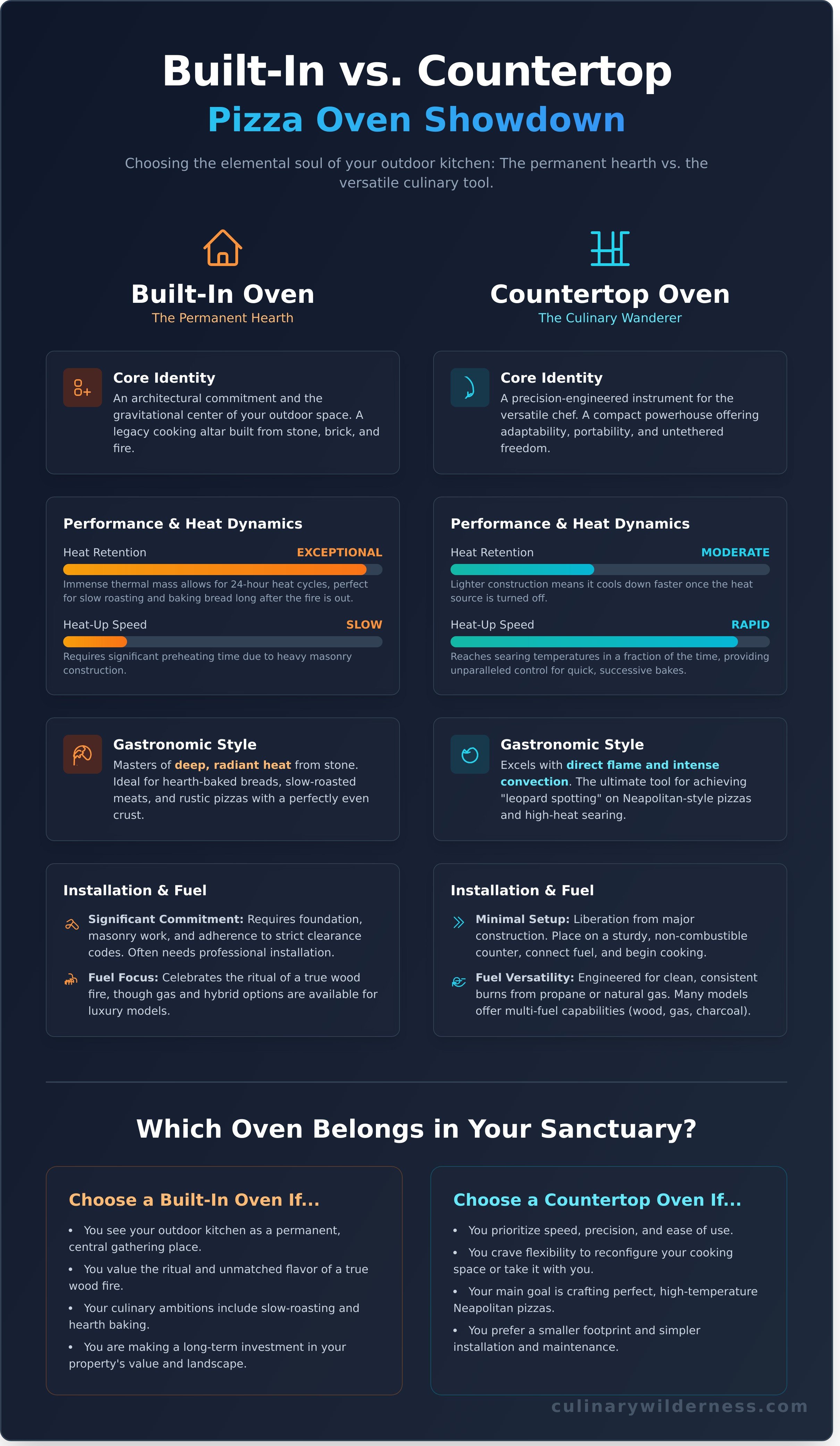
A built-in oven is a fortress of heat. Cradled in refractory brick and heavy masonry, luxury units from makers like Fire Magic become extensions of the earth, absorbing and radiating warmth with an ancient, unwavering rhythm. This immense thermal mass allows for 24-hour heat cycles, turning yesterday’s pizza fire into the perfect environment for today’s slow-roasted meats or crusty, hearth-baked bread, long after the last ember has faded.
The Countertop Edge: Rapid Response and Precision
Where the built-in is patient, the countertop model is immediate. High-end gas-fired units offer the busy host the gift of speed, reaching searing temperatures in a fraction of the time. This rapid response provides unparalleled control for quick, successive bakes. Furthermore, their self-contained nature means internal components are more accessible, simplifying the rare occasion when maintenance or repair is needed—a practical edge for the modern artisan.
Your oven’s form dictates its relationship with your space. A built-in unit integrates seamlessly, its stone or stucco façade becoming a primal focal point of your outdoor kitchen. It demands a significant structural commitment, a permanent piece of your landscape. In contrast, a countertop oven like those from Kokomo Grills offers a rugged, stainless steel presence. It claims a smaller footprint on your counter but makes a bold statement of function and efficiency.
This structural difference also influences your connection to the fuel source:
- Built-In Ovens: Often designed to celebrate the ritual of a true wood fire, though gas and hybrid options exist. They are masters of wood-fired flavor, their very design an homage to the elemental.
- Countertop Ovens: Excel in fuel versatility. Many are engineered for the clean, consistent burn of propane or natural gas, while others offer multi-fuel capabilities, allowing you to switch from wood to gas at a moment's notice.
The Gastronomic Output: Does Placement Affect the Char?
The soul of a great pizza lies in its crust. That coveted "leopard spotting"—the constellation of charred blisters against a pale, chewy landscape—is not an accident. It is a story written by fire. This story is told differently depending on the oven's architecture, and it's a critical factor in the built-in vs countertop pizza oven debate.
A traditional built-in masonry oven is an elemental beast. Its high, vaulted dome and thick, heat-saturated walls create a natural convection current, circulating air in a slow, rolling pattern that cooks the toppings as the stone floor sears the base. It breathes heat. The Rugged Gourmet understands that the flavor here is complex, infused with the character of the wood itself—the subtle smokiness of weathered oak or the sweet perfume of applewood embers that kiss the dough.
Countertop units, lacking the thermal mass of their larger kin, achieve this effect through clever engineering. They utilize advanced airflow technology and strategically placed burners to mimic the heat dynamics of an ancient oven. The result is a clean, intense, and incredibly consistent heat. The flavor is pure, allowing the San Marzano tomatoes and foraged mushrooms to stand at the forefront, unadorned by smoke.
Mastering the 800-Degree Threshold
The real trial of any oven is maintaining a blistering floor temperature. A built-in’s dense stone acts as a thermal battery, holding its heat steadfastly as you launch pizza after pizza for a hungry crowd. Its recovery time is almost negligible. A countertop oven, while remarkably powerful, needs a brief moment to rebound between bakes, a small price for its agility and speed.
Beyond Pizza: Roasting and Foraged Flavors
Your oven’s purpose extends far beyond the perfect margherita. The retained heat of a well-insulated built-in is an invitation to slow cooking. Once the fire dies to glowing coals, it’s the perfect vessel for:
- Cast-iron searing a dry-aged steak
- Slow-roasting wild game until it falls from the bone
- Baking rustic, hearth-style bread with an unbeatable crust
The countertop unit, with its rapid-fire heat, excels at versatility and speed. It’s an ideal partner for quick-fire appetizers and sides, transforming simple ingredients with a blast of intense heat. Think charred wild asparagus, blistered shishito peppers, or flash-seared scallops served straight from the flame.
Technical Realities: Installation, Utilities, and Codes
The dream of fire and dough gives way to the hard realities of earth and steel. Before the first flame licks the dome, you must contend with the unyielding laws of physics and local codes. The true difference in the built-in vs countertop pizza oven debate is measured not just in permanence, but in preparation.
This is the uncharted territory where ambition meets engineering. A high-output gas oven is a hungry beast; its roar demands a dedicated, properly sized gas line capable of feeding its high-BTU appetite without starving other appliances. Fire also demands respect. Both oven styles require significant clearance from combustible materials—your home’s siding, a weathered cedar fence, the overhead beams of a pergola. Ignore these distances at your peril.
For covered outdoor kitchens, the story of smoke needs a clear path. A chimney isn’t an accessory; it’s a necessity for guiding soot and heat away from your gathering space. And as you plan, think like a steward of your domain. How will you protect your investment through the deep freeze of winter 2026? A weatherproof cover and seasonal inspection for cracks caused by the freeze-thaw cycle are elemental acts of foresight.
The Hidden Costs of Permanence
A built-in oven is a commitment to the land, and it carries a heavy price. The cost extends beyond the unit to the mason’s craft, the custom fabrication of a stone-clad island by specialists like Countertops and Cabinetry By Design, and the bureaucratic maze of permits for permanent gas and chimney structures. Once the mortar sets, your decision is literally written in stone, a point of no return that defines your outdoor space for years to come.
This level of custom work often inspires homeowners to refresh their indoor spaces as well. For the main kitchen, revitalizing the cabinetry is one of the highest-impact updates. A professional refinishing can complement the investment you're making outdoors, and for those in Colorado, specialists like Cabinet Painting Denver offer expert services to transform existing cabinets.
The Plug-and-Play Myth of Countertops
Do not mistake portability for simplicity. A countertop unit is no mere appliance; it’s a crucible of intense heat that demands a proper altar. This means a dedicated, non-combustible surface like granite, concrete, or steel—never wood. You must also manage its fuel, wrestling with propane tanks or installing a natural gas conversion kit. Above all, its footing must be level and unyielding, as the weight of a heavy stainless steel oven on an unstable base is an invitation for disaster.
For a deeper dive into crafting the perfect foundation for your outdoor hearth, explore the elemental guides at culinarywilderness.com.
Curating Your Wilderness: Which Oven Belongs in Your Sanctuary?
The final question in the built-in vs countertop pizza oven debate is not one of function, but of philosophy. It’s about carving out a permanent hearth or honing a portable flame. This choice defines the long-term return on your investment—the enduring prestige of an architectural feature versus the agile flexibility of a master tool. It’s a declaration of your culinary identity.
The Case for the Built-In Masterpiece
This is the anchor for the forever home, the central fire for the dedicated entertainer. A built-in oven is a statement of permanence, seamlessly integrated into your outdoor kitchen's stonework and steel. Imagine an Alfa or Fontana Forni oven inset beside your ZLINE or Fire Magic grill—a unified, elemental command center built for generations of gatherings. It’s not just an appliance; it’s the heart of your domain.
The Case for the Countertop Precision Tool
For the chef whose landscape evolves, the countertop oven is a precision instrument, not a temporary fix. A professional-grade model offers ferocious heat and refined control, a lifetime investment in culinary craft that can move as you do. It’s the choice for the innovator who values adaptability, allowing your sanctuary to grow and change without sacrificing the power of the flame. Explore our curated collection of professional pizza ovens and find your perfect tool.
So, which path is yours? The decision is a reflection of your approach to the wild. Do you build a permanent shelter, a bastion against the elements where community gathers? Or do you carry a finely-honed tool, ready to create a masterpiece wherever the journey takes you?
At Culinary Wilderness, we honor both traditions. We exist to bridge the gap between wild fire and refined taste, guiding you to the equipment that resonates with your spirit. Whether you’re laying the cornerstone of a culinary legacy or sharpening the edge of your craft, the right oven awaits. It's more than a choice; it's about curating the wilderness that feeds your soul.
Forging Your Culinary Hearth
The hearth is the heart of your outdoor sanctuary. Whether you choose the deep-rooted permanence of a built-in oven, seamlessly integrated into weathered stone, or the untamed freedom of a countertop model that follows your journey, your decision defines the space. The question of built-in vs countertop pizza oven is less about technical specifications and more about how you intend to connect with the primal element of fire. It's a choice between a steadfast, ancestral flame and one that travels with your culinary spirit.
When you are ready to claim your elemental anchor, we are here to guide the journey. As specialists in high-heat performance and outdoor kitchen design, Culinary Wilderness is your authorized dealer for rugged, professional-grade ovens from Fire Magic, Kokomo, and ZLINE. We provide expert nationwide shipping on luxury outdoor appliances, ensuring your chosen hearth arrives ready for the first spark. Return to the source and shop our professional outdoor pizza ovens. Your wilderness awaits.
Frequently Asked Questions
Is a built-in pizza oven worth the extra cost over a countertop model?
A built-in oven is an elemental anchor for your outdoor space—a permanent hearth forged from stone and fire. Its value lies in superior thermal mass, unwavering heat retention, and its role as a gathering place. When considering a built-in vs countertop pizza oven, view the cost as an investment in permanence. A countertop model offers freedom for the nomadic cook, but a built-in oven becomes part of the landscape, a testament to a deeper commitment to the craft.
Can I convert a countertop pizza oven to a built-in later?
This is a path to walk with caution. Some modular countertop ovens are designed with conversion in mind, crafted to integrate into a future masonry surround. However, most portable units lack the proper heat shielding and ventilation for permanent enclosure. To entomb an oven not forged for that purpose is to risk damaging the unit and creating a serious fire hazard. Always honor the manufacturer’s design and consult their specifications before building it in.
Do built-in pizza ovens require a chimney for outdoor use?
Yes. The chimney is the lungs of a wood-fired oven. It’s essential for creating a proper draft, pulling oxygen to feed the flame, and venting smoke up and away from the hearth. This ensures a cleaner, more efficient burn and a more pleasant environment for the cook. Even for gas models, a venting system is crucial for channeling heat and exhaust, allowing the oven to breathe as it was intended.
Which type of oven holds heat better for baking bread?
For the patient, resonant heat that bread demands, the built-in oven is unmatched. Its dense, refractory dome and floor act as a thermal battery, absorbing immense energy from the fire and radiating it back slowly and evenly for hours. After the flames die to embers, this retained heat creates the perfect environment for a dark, crackling crust and a moist, open crumb. A countertop oven simply cannot replicate this deep, enduring warmth.
Are countertop pizza ovens safe to use on wooden decks?
Treat the flame with reverence, especially on a wooden terrain. Never place an oven directly on a deck; the intense downward heat will scorch and can ignite the wood. You must create a non-combustible hearth for it to rest on—a thick stone paver or a sturdy metal table is essential. Maintain a clear, safe distance from railings, walls, and any overhead structures. Respect the fire’s power, and it will serve you well.
What are the gas line requirements for a professional outdoor pizza oven?
Harnessing gas for a professional oven requires a dedicated, unyielding source. This means a permanent natural gas line or a large, stationary propane tank plumbed directly to the unit—portable canisters will not suffice. This connection is not a task for the uninitiated. A licensed gas fitter must lay the line, ensuring the pipe diameter and pressure are sufficient to feed the flame safely and consistently, in accordance with all local codes.
How do I protect my built-in pizza oven during the winter?
When the land sleeps, so should your hearth. The greatest threat is the freeze-thaw cycle, where moisture seeps into the masonry, freezes, expands, and causes cracks. To protect it, shield your oven with a high-quality, waterproof cover that repels snow and ice. Ensure the chimney is capped to keep out debris and nesting creatures. Tended to properly, your oven will weather the cold and awaken, sound and strong, with the spring thaw.
Can I use wood in a countertop pizza oven designed for gas?
An oven is born of a specific element; to force another upon it is to invite disaster. A gas-only oven is engineered for the clean combustion and precise ventilation of gas. Introducing wood creates unpredictable flames, acrid smoke, and a buildup of soot and creosote that can clog and destroy the gas components. It is a severe fire hazard. Honor the oven’s nature by using only the fuel for which it was forged.


